
Amal, here's what we covered
1754 E San Carlos Pl, Chandler, AZ 85249Thanks for having me out to walk the property. I put this together in the same order we walked it, backyard through front. As a consult client you're already in the Garden Nerd Club, so I'm happy to keep working through this list with you whenever you're ready.

Beds, Fresh Soil, and a Planting Calendar
This is a great spot for raised garden beds. Olle Gardens is where I'd source the beds themselves. Before they go in, I'd pull the rock back and lay down a couple feet of mulch to cool this whole area down. Once the beds are in, my Maricopa County planting guide will walk you through what to plant and when as the seasons change.

A Fig Here, Sourced Right
This corner is a good spot for a fig tree. There are a lot of great varieties out there, Black Mission and Brown Turkey are both easy, reliable choices. For sourcing, I'd go to Greenlife Nursery rather than a big box store like Home Depot, you'll get better stock and more variety to choose from. Pull the rock back and build a proper water well around it. Fruit trees like a deep soak about once a week rather than frequent shallow watering.

Fig
Fairly easy going, deciduous, heavy crop with little fuss.

Hopseed, Arizona Rosewood, or Orange Jubilee
For this wall, Hopseed grows fastest and thickest with the least water once established, a great low maintenance choice that fills in within a season or two. Arizona Rosewood gives you the densest, most uniform look of the three, out of everything we use it's the one that ends up looking the most like a ficus hedge, tight and formal, if that clean, dense look is what you're after. Orange Jubilee is the showiest option, orange blooms most of the year, but it wants a bit more water than the other two and has a looser, more natural growth habit rather than a tight hedge form. I'd leave the section closer to the patio open for now since you're likely putting in a pergola back there.

Hopseed
Fastest and thickest, least water once established.

Arizona Rosewood
Densest, most uniform hedge look.

Orange Jubilee
Showiest option, wants a bit more water.
Leave the pergola area open, and pick one variety to run along the rest of this wall.

Cover the Wall for a Clean Look Behind the Pool
For aesthetics behind the pool, I'd just focus on covering this wall rather than mixing in fruit trees here, we'll save those for the next section. Same lineup as the other wall, Hopseed, Arizona Rosewood, or Orange Jubilee, and Oleander is worth adding to the list too, it's a fast, tough option that gives you a lot of white, pink, or red bloom color depending on the variety, though it does need more room to spread out than the other three.
Hopseed
Fastest and thickest, least water once established.
Arizona Rosewood
Densest look, closest to a ficus hedge.
Orange Jubilee
Showiest option, wants a bit more water.
Oleander
Fast, tough, lots of bloom color, needs more room to spread.
Pick one to run the length of this wall for the cleanest look.

Citrus, Peach, Pomegranate, and a Grape Vine
This stretch of wall is a great spot for a mix of fruit trees. Citrus stays evergreen year round and gives you fruit for months. Peach, specifically the Florida Prince variety, is bred for our low winter chill hours and drops its leaves each winter before flushing out again in spring. Pomegranate stays more compact than the other two and is one of the easiest fruit trees to grow here. If you'd rather not dedicate this whole wall to a hedge, citrus can also be interspersed right in among the Hopseed, Rosewood, or Orange Jubilee from the last section, just keep at least eight feet between each tree so they have room to fill out. Up against the fence itself, a grape vine is a nice addition, just make sure it has a trellis or some other support to climb as it grows.

Citrus
Evergreen year round.

Peach (Florida Prince)
Low chill hours, deciduous.
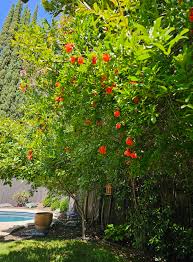
Pomegranate
Compact size, deciduous.
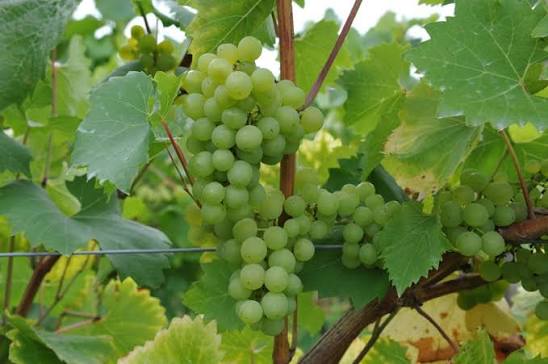
Grape Vine
Needs a trellis or support to climb the fence.

Five Options, Evergreen and Deciduous
For a big tree to knock back that afternoon sun from the west, here are a few directions to go. Ficus works well right in this spot specifically because it's out in the open, not right up against a wall or concrete, ficus roots can cause real problems when they're planted too close to hardscape or foundations, but out here that's not a concern. Carob is another evergreen option, tough and well-shaped, staying green year round like the ficus. Chinese Elm and Red Push Pistache are both deciduous, dropping their leaves and going bare for a couple months each winter before leafing back out in spring. Tipu is a bit different, it thins out in winter but never goes fully bare the way the other two do, it tends to hold onto some leaves even through the coldest months. All three grow fast and give excellent shade, with Red Push Pistache adding striking red fall color the others don't have.
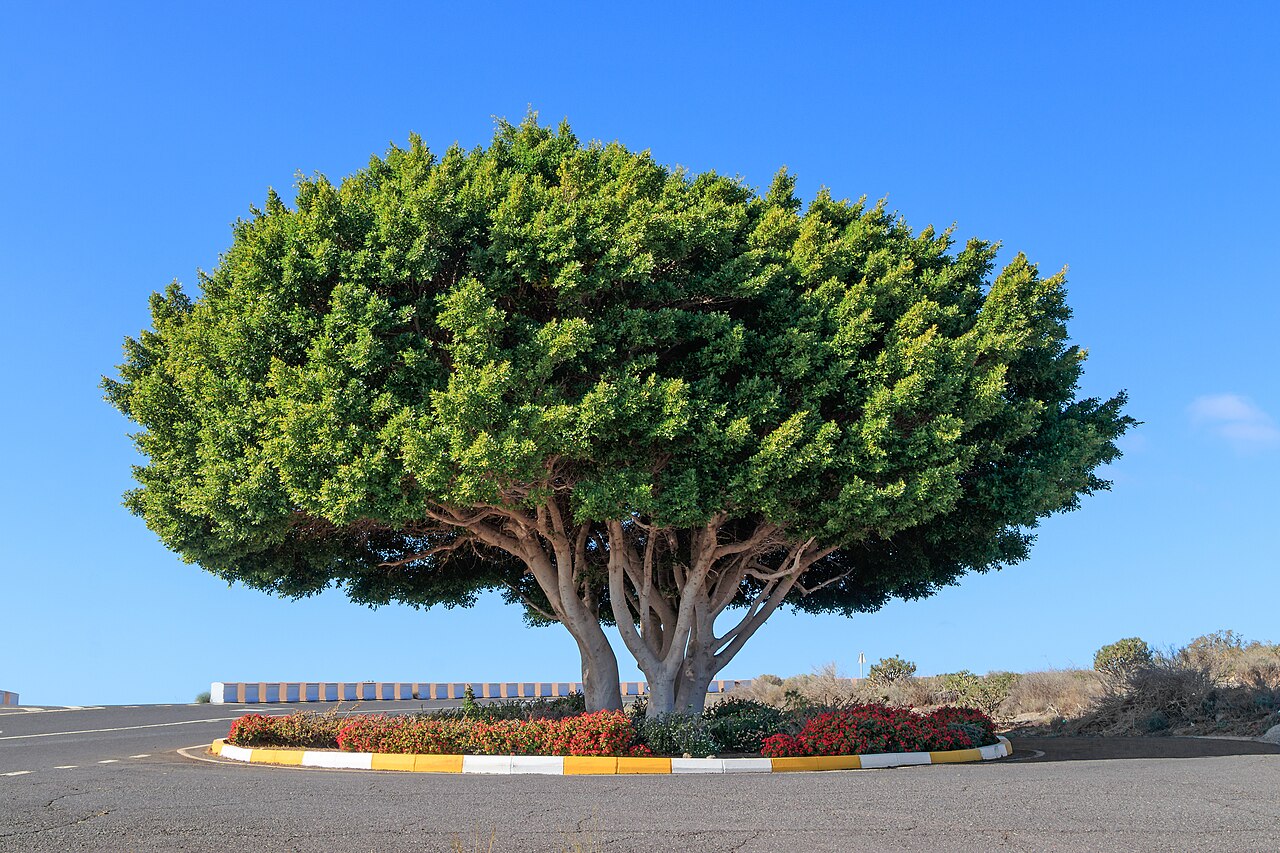
Ficus
Evergreen, plenty of room to grow needed.
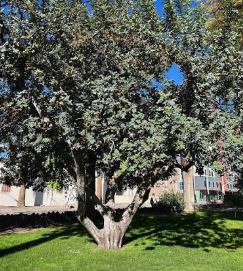
Carob
Evergreen, tough and well-shaped.
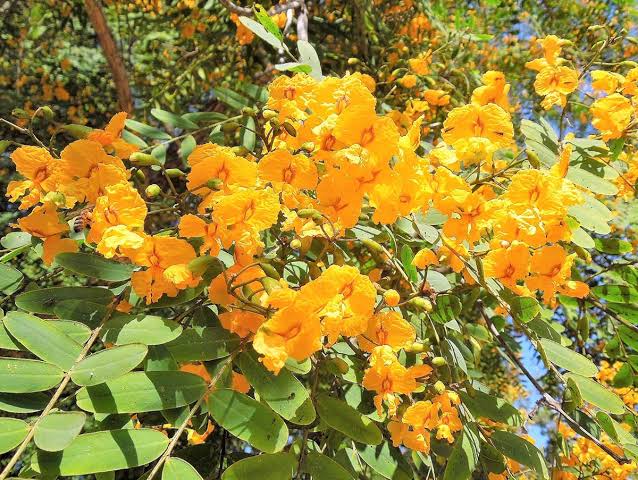
Tipu
Thins out in winter but never goes fully bare, fast and tall, yellow-orange blooms.

Chinese Elm
Deciduous, fast growing, dense canopy.

Red Push Pistache
Deciduous, vivid red fall color.

Something Smaller, With Real Presence
Right here, a second, smaller shade tree makes sense, nothing as large as the one in the last section, just enough to add some shade along with a real statement piece. Hong Kong Orchid is my pick, big purple orchid-like blooms in the cooler months and it stays semi-evergreen through most of our winters. Red Push Pistache would work well here too if you'd rather have fall color over the orchid blooms, it stays a bit more modest in size than it would in a full sun, open spot.

Hong Kong Orchid
Purple orchid-like blooms in the cooler months, semi-evergreen.
Red Push Pistache
Vivid red fall color, more modest size here.

Watering, Mowing, and Feeding This Grass Right
For this lawn, water deeply but less frequently rather than a little every day, a couple of longer soaks a week gets water down to where the roots actually are, which trains the grass to root deeper and hold up far better through our heat than daily shallow watering does. Early morning is the best time to water, before the heat of the day causes evaporation loss and while the blades have all day to dry out, which helps prevent fungal issues.
Keep the mower height a little taller than you might think, taller grass shades its own root zone, holds moisture better, and crowds out weeds more effectively. Mow regularly enough that you're never removing more than about a third of the blade length in one pass, scalping it back hard stresses the lawn and opens it up to sun damage.
For feeding, a regular fertilizing schedule keeps it green and thick rather than letting it thin out and go patchy between treatments. A monthly or quarterly feeding rhythm, depending on the product, keeps the color consistent and the grass dense enough to fend off weeds on its own.

The Greenest Desert Adapted Options
Since it's hot and rocky throughout the yard, everything here needs to be desert adapted, but I'd lean toward the greenest looking options available so it doesn't read as too stark. For low groundcover, Yellow Dot is a great fit, fast spreading with bright yellow flowers that hold up well over rock. For mid-height shrubbery, Texas Sage and Cape Plumbago both stay green and full without needing much water once established. To round things out with a bit more color and variety, Globe Mallow and Chuparosa both bring in pollinators and stay reliably green between bloom cycles, and Twisted Myrtle is a good denser, more structured mid-height option if you want something with a tighter form than the others.

Yellow Dot
Low groundcover, fast spreading, bright yellow flowers.

Texas Sage
Mid height, silvery foliage with purple blooms.
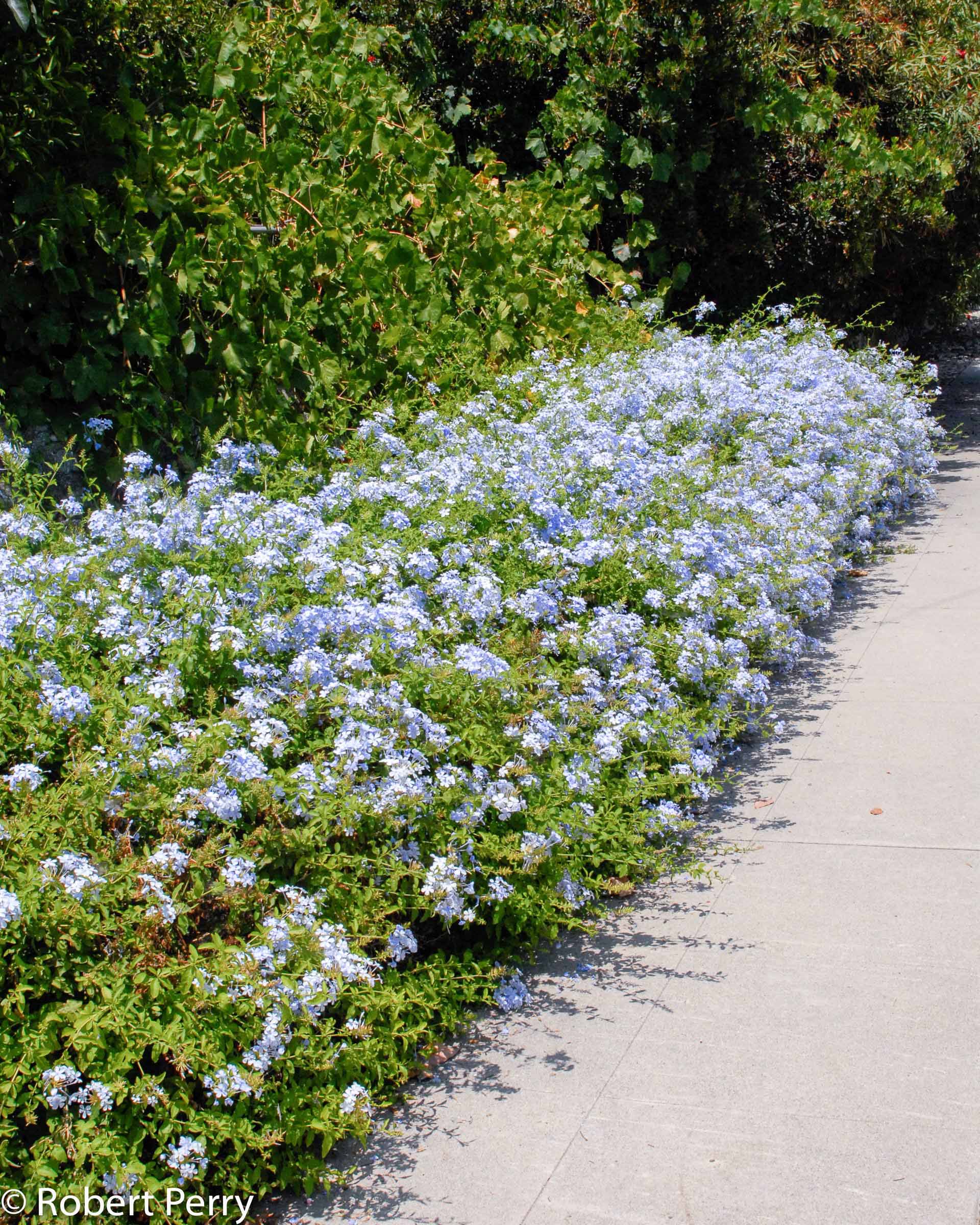
Cape Plumbago
Mid height, soft blue blooms nearly year-round.

Globe Mallow
Bright orange blooms, tough and easy, great pollinator draw.
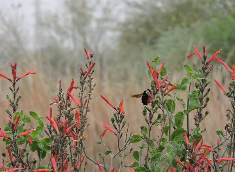
Chuparosa
Red tubular blooms hummingbirds can't resist.

Twisted Myrtle
Denser, more structured mid-height option.

Clear the Competition, Rebuild the Soil
These roses are struggling because they've got competition, the Orange Jubilee growing in behind them and a milkweed vine both need to come out to give the roses room to breathe. I'd also pull the rock away from the base. From there, work in a good amount of compost from Arizona Worm Farm along with some composted chicken manure, then finish with mulch on top. That combination should get these roses looking good again. On top of that, give them a good hard prune this winter too, cutting them back hard while they're dormant pushes strong, healthy new growth once spring hits.

Creeping Fig, or a Couple Other Vine Options
Creeping Fig is my first choice for these pillars, it prefers filtered light and will climb and cling directly to the surface on its own, no trellis needed. Star Jasmine is another good option if you want fragrant white blooms along with the coverage, but it will need a trellis or wire support to climb since it doesn't cling on its own the way Creeping Fig does. Tangerine Crossvine works well too if you'd rather have some orange color mixed in, and it also needs a trellis or similar support to climb.

Creeping Fig
No trellis needed, clings directly to the surface.
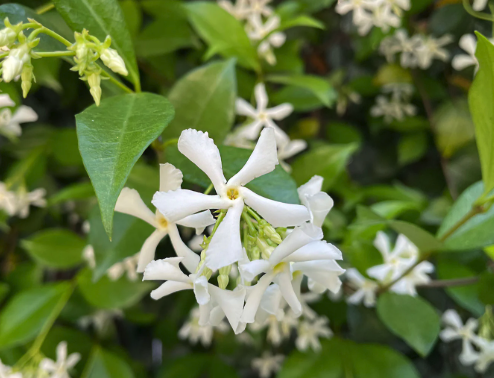
Star Jasmine
Needs a trellis or wire support to climb.

Tangerine Crossvine
Needs a trellis or similar support to climb.

It's Fine for Now, Cut It Hard at the End of Winter
This lantana looks fine as is right now, no need to touch it yet. Toward the end of winter, right before spring growth kicks in, give it a really good prune, you can even cut it back to the stump if you want. That clears out all the woody, dead growth and forces it to push fresh, healthy growth for the season ahead.

Tipu First, With a Couple Backups
For this grassy front yard spot, I'd go with Tipu as the first choice, it's a big, fast growing tree that'll give you real afternoon shade and a lot of green canopy. If you want other options, Chinese Elm is a strong runner-up for fast growth and shade, or Ficus if you'd rather have something evergreen year round.
Tipu
First choice, big, fast, great shade.
Chinese Elm
Backup option, fast growing, dense canopy.
Ficus
Backup option, evergreen year round.

Flagstone Pavers, Plus an Ornamental Tree by the Rock
A flagstone paver walkway right here would look great leading up to the house. On the left side, where the rock currently is, I'd add a more ornamental tree, something that grows fairly tall but stays out of the way of the driveway. Hong Kong Orchid or Red Push Pistache would both fit nicely without becoming a problem for cars pulling in and out.
Hong Kong Orchid
Purple orchid-like blooms, stays out of the driveway's way.
Red Push Pistache
Vivid red fall color, grows tall without spreading wide.

Leaning Tropical, With Some Help From the Heat
This spot faces south and gets blasted with sun most of the day, so we'll need plants that can handle that intensity while still giving you the tropical look you're after. I'd start by removing the rock here and working in mulch and compost, that gives these plants real soil to root into rather than fighting through rock and reflected heat. San Marcos Hibiscus is a great starting point, soft yellow blooms most of the year and it takes the heat in stride. Plumeria and Red Hibiscus would both add to that tropical feel too.
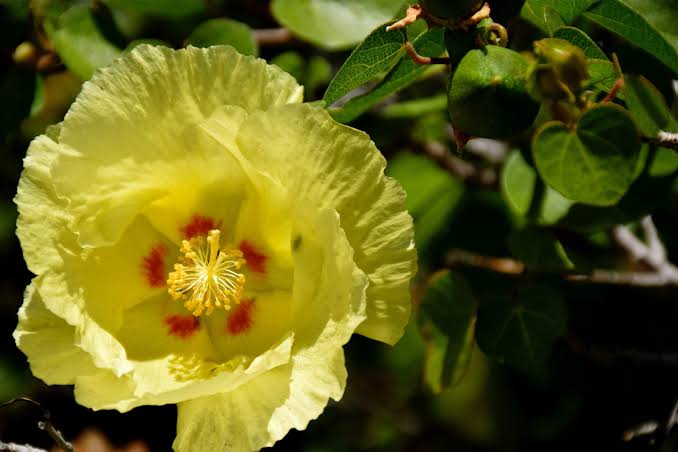
San Marcos Hibiscus
Soft yellow blooms most of the year, handles intense sun.
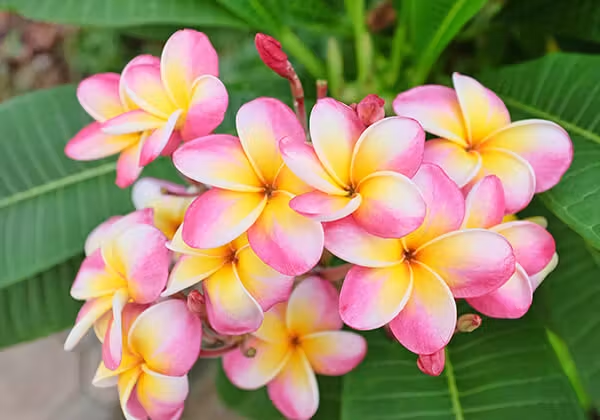
Plumeria
Classic tropical look and fragrance.

Red Hibiscus
Bold red blooms, tropical look.
Feed the Whole Yard
With this much going into the ground, the whole property will do a lot better with regular feeding behind it. Our monthly fertilizing program covers the full landscape with a liquid feeding each month plus compost applied a few times a year, built to build up real soil biology rather than force growth with synthetic salts.
Monthly Landscape Fertilizing
Full landscape, liquid feeding every month plus compost applied a few times a year.
Text me to get startedWho to Call, Where to Go
For compost, visit Arizona Worm Farm. For fig varieties and other fruit trees, Greenlife Nursery has a much better selection than a big box store. For the raised beds, Olle Gardens is where I'd source them. For what to plant and when as the seasons change, my Maricopa County planting guide covers it season by season.
Let's tackle this in whatever order makes sense
There's a lot here, so pick what matters most to you first, the fruit trees, the shade trees, or the front yard. We can advise you along the way in the Garden Nerd Club, or if you'd rather have help with any of it, planting or anything else, just reach out and I can get you pricing.
You can also read more about how we plant at thegardennerd.org.