
Ericka, here's what we covered
2237 N Dayton St, Phoenix, AZ 85006Thanks for having me out to walk the property. I put this together in the same order we walked it, backyard through front. As a consult client you're already in the Garden Nerd Club, so I'm happy to keep working through this list with you whenever you're ready.

Hopseed and Arizona Rosewood
This wall faces east into the alley, so it's a good spot for something that won't need much water and fills in fast. Hopseed and Arizona Rosewood both fit that well here.

Hopseed
Fast, thick, fills in quickly.

Arizona Rosewood
Dense, upright, doesn't need much water once established.

Top Them Off, No Need to Start Over
For these beds, Arizona Worm Farm sells a raised bed soil mix that you can add right on top, no need to remove the current soil in there first. They also carry a good selection of vegetable starts right now if you want to get things in the ground quickly rather than starting from seed. For a full planting calendar of what to put in and when, my Maricopa County planting guide walks through it season by season.

A Hard Reset This Winter
For both of these, I'd do a hard reset this winter, cut them back to about one or two feet off the ground. That sounds drastic, but it's what gets them to fill back in thicker rather than staying leggy. Our monthly fertilizing program would help push new growth here too, see the Fertilizing section below for details, or if you want to handle feeding yourself in the meantime, working in several handfuls of compost once a month around the base will genuinely help jump start new growth.

Planted a Bit Too Deep, Handle It Gently
This mesquite is planted a little too deep. I'd dig around it carefully to expose the root flare, going gently since it's still a new tree and the roots haven't fully established yet. If you dig down and the tree still seems too deep to fully expose the flare without disturbing the roots too much, use a shovel underneath the root ball to lift the whole tree up slightly, then pack soil in underneath to hold it at that new, higher level.

A Few Directions to Go Here
For this wall, Tangerine Crossvine gives you reliable coverage with orange blooms. Star Jasmine brings fragrant white flowers along with the coverage. Snail Vine is a fun, less common option, it gets curly purple blooms that really do look like little snail shells. Creeping Fig is worth considering too if the wall gets more shade than sun through the day. Passion Fruit is another good option if you'd like to get some fruit out of the deal along with the coverage. Hacienda Creeper is worth a look too, it's one of the few vines here that actually gives you real fall color, the leaves turn shades of red and orange before dropping for winter, which is a nice change of pace from the others on this list that stay green year round.

Tangerine Crossvine
Reliable coverage with orange blooms.
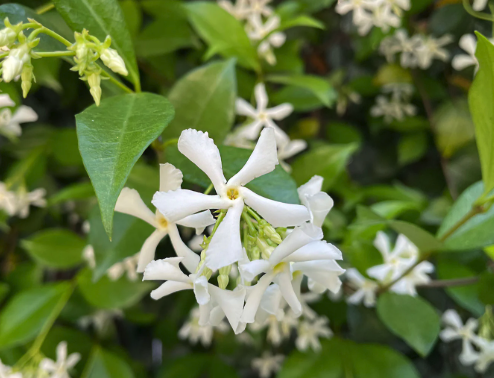
Star Jasmine
Fragrant white blooms along with the coverage.

Snail Vine
Curly purple blooms shaped like little snail shells.
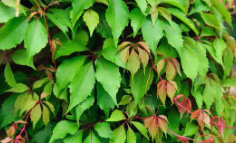
Hacienda Creeper
Real fall color, leaves turn red and orange before dropping for winter.

Creeping Fig
Good option if this wall leans more shady than sunny.

Passion Fruit
Coverage plus fruit as a bonus.

Plant Now, Smallest Size, Above Grade
This is a great spot for a mango, and right now is actually a good time to get one in the ground. Go with the smallest size tree you can find rather than a larger one, mangoes establish better that way. Planting depth matters a lot here too, if anything, err toward planting it a little high with the root flare above grade rather than risk burying it too deep, that's the mistake that causes the most problems with mango trees long term.

Also a Good Spot to Plant One
This is another good spot for a mango, so this can be a planting spot too, not just something to think about later. Since you're picking out mangoes, here's where I'd point you on flavor. Kent is genuinely one of my favorites, consistently sweet with a smooth texture. Sweet Tart lives up to its name and gives you a nice balance if you want something a little brighter. Alfonso is another really good option, and Lemon Zest is worth trying too if you like a bit of citrusy brightness in the mix.

Mango
Kent, Sweet Tart, Alfonso, or Lemon Zest, all good options.

Deep Soak It, Then Ease Off Into Winter
Honestly, this one's a bit of a mystery to me, it's not planted too deep and it seems well rooted, so I don't have an obvious structural fix to point to. What I'd try is a really deep soak, put it on a very slow drip and let it run for twenty four to forty eight hours. Do that now, then repeat it again in two weeks. After that, you can back off watering going into winter since it'll start dropping its leaves for the season, that's normal. For fertilizing, working in a good amount of quality compost around the base would be a good start.

Two Matching Trees to Complete the Shape
With the Red Push Pistache anchoring one point of this triangle, I'd plant two matching trees on the other two points, either a pair of Desert Willows or a pair of Hong Kong Orchids. Both options will grow up, give you good color, and eventually cast shade over the garden beds you're planning to put in behind them.
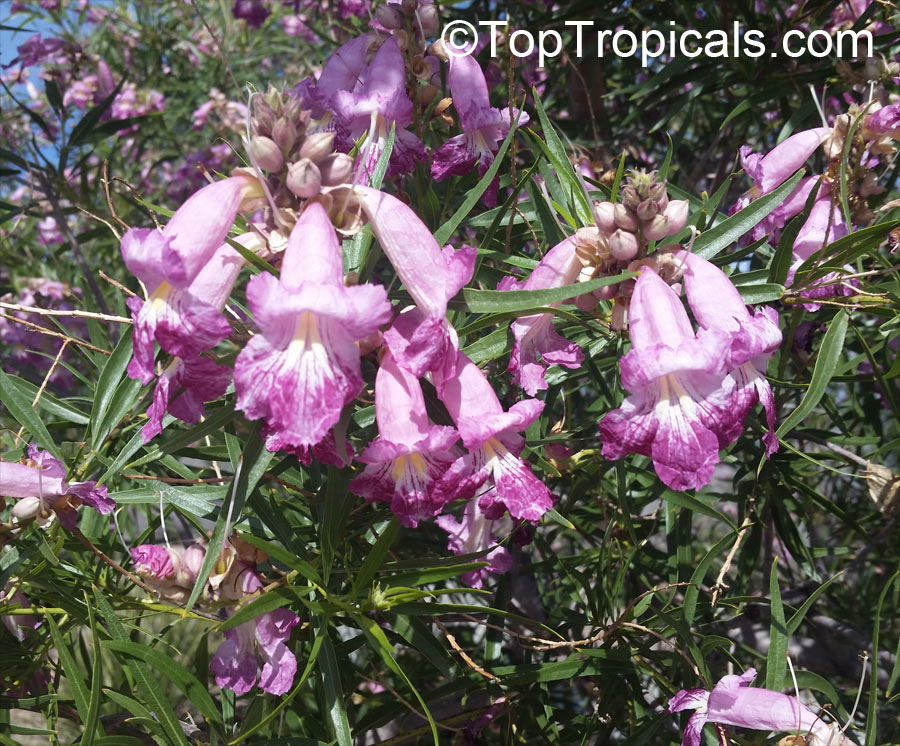
Desert Willow (pair)
Orchid-like blooms all summer, doesn't need much water once established.

Hong Kong Orchid (pair)
Purple orchid-like blooms in the cooler months, semi-evergreen.

Good As Is, But Here Are Some Alternatives
This Lantana is doing a fine job as groundcover, no complaints there. If you ever want to switch it up though, Yellow Dot is probably the best alternative, fast spreading with bright yellow flowers. Kurapia and Dichondra would both work well too if you want a different texture.

Yellow Dot
Fast spreading, bright yellow flowers.

Kurapia
Low, tidy, tolerates foot traffic well.
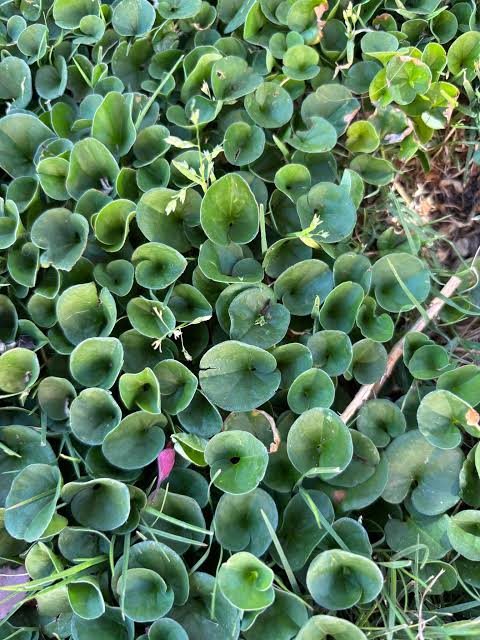
Dichondra
Soft, fine-textured groundcover.

Passion Fruit Vine or Barbados Cherry Hedge
This one's ready to be replaced. Passion Fruit works well as a climbing vine if you want something for a trellis or fence, plus you get fruit out of it. Barbados Cherry is my other suggestion, it grows in nicely as a hedge and should be happy in this spot, you can pick one up at Greenlife Nursery.
Passion Fruit
Climbing vine, works well on a trellis or fence.
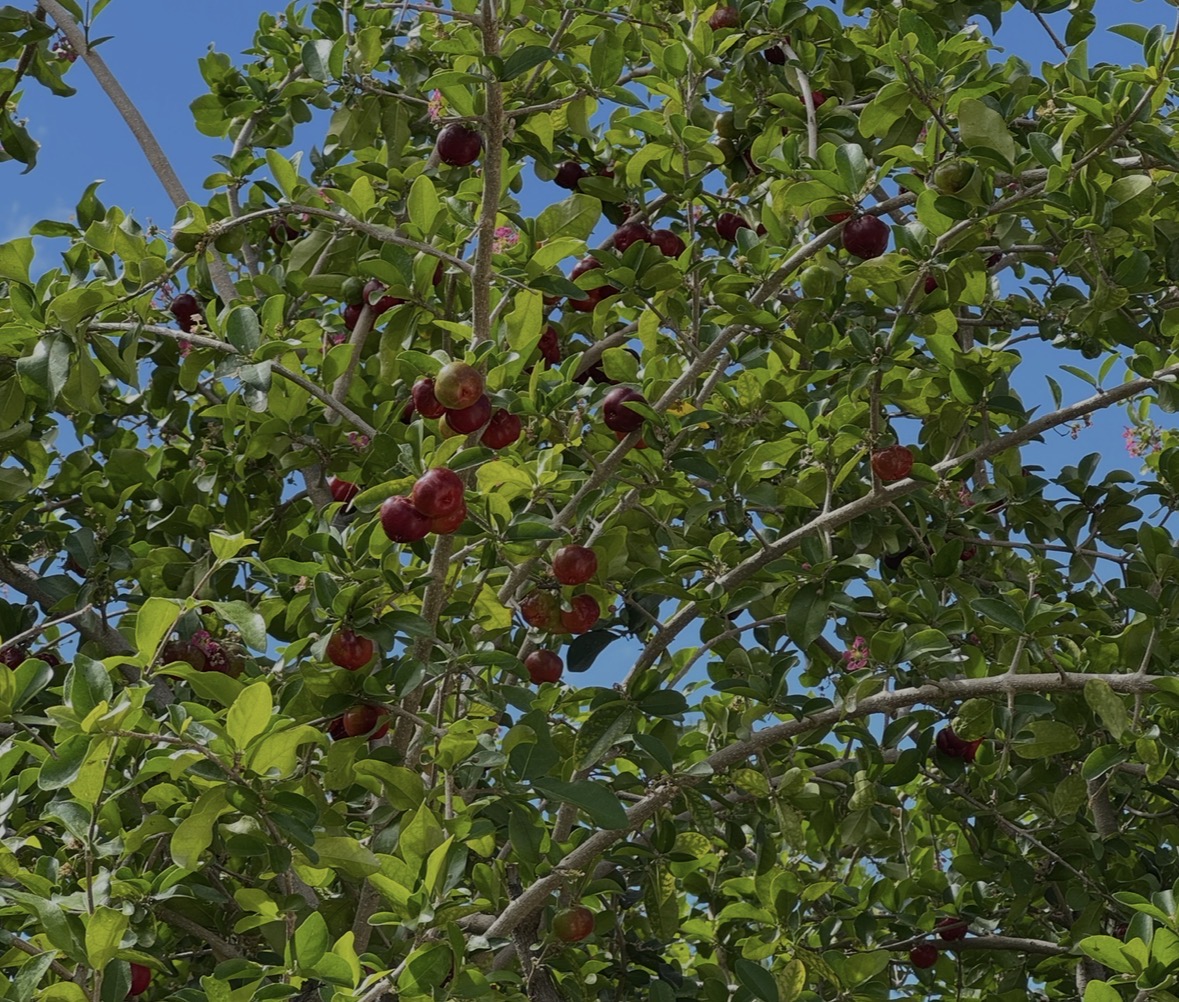
Barbados Cherry
Grows in nicely as a hedge.

Looking Happy, Root Flare Would Still Help
This elm looks genuinely happy, but it would still benefit from having the roots dug out and the root flare exposed. I'd hold off and do that this winter once it goes dormant, that's the best time to disturb the roots with the least stress on the tree.

Mulch the Whole Area, Just Not Right on the Trunk
Once the artificial turf here comes out, I'd cover the whole area with mulch. Just keep it pulled back from the trunk of the tree rather than piled against it, and keep it clear of the water well too. For sourcing, chipdrop.com is a good option for bulk mulch, or you can pick some up directly from Arizona Worm Farm.

A Smaller Reset Than the Others
These bougainvillea just need a lighter reset compared to the other two we talked about, nothing as drastic. Beyond the trim, feeding them consistently with quality compost will help quite a bit and push healthier new growth.

A Couple Alternatives to Star Fruit
Star Fruit would work here, but if you want other directions, a Bottle Tree is a great option, it grows into a nice shade canopy without the mess that a fruiting tree would drop in this particular spot. Chinese Elm is another solid option if you'd rather have something fast growing with a denser canopy.

Bottle Tree
Good shade canopy without the mess of dropped fruit.

Chinese Elm
Fast growing, dense canopy, no fruit to manage.

An Easy Way to Start Your Own
This is a good spot for papaya, and you can actually start your own from seed rather than buying a tree. Grab a papaya from the store, pull a few seeds out, and fill a red Solo cup with soil. Wet the soil, tuck a seed inside, and cover the top of the cup with saran wrap to hold humidity in. Then just leave it alone, don't touch or check on it, until you actually see it sprout. From there, let it fully root out in the cup, and once it has, get it in the ground here.

Not Urgent, But Worth the Root Flare Work
All of the ficus here could use root flare excavations. This isn't as urgent as some of the other trees on this list, but they'd still genuinely benefit from it. Beyond that, feeding them compost on a monthly basis along with a quality organic fertilizer would help them fill out and stay healthy.

Yellow Dot, Plus a Couple Others
Yellow Dot is a great option here, fast spreading with bright yellow flowers. Kurapia and Clover are both worth considering too if you want to mix up the texture from one bed to the next.
Yellow Dot
Fast spreading, bright yellow flowers.
Kurapia
Low, tidy, tolerates foot traffic well.
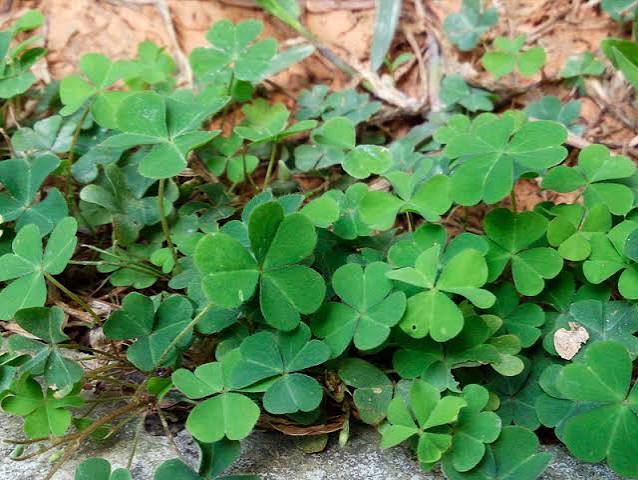
Clover
Nitrogen fixing, good in shadier spots too.

Not Bad, But Two Things to Fix
This tree isn't in bad shape overall, but it is buried a bit too deep, the root flare needs to be exposed. Nothing serious, just a straightforward root flare excavation to fix it. The other thing to address now is the support ties, they're cinched too tight and starting to girdle the trunk. I'd loosen those up right away so they're not cutting into the bark as the trunk continues to grow.

Pack In More Color to Match the Vibe
You've already got agave, sage, and lantana established here, and it's a great look. I'd keep packing this bed in with more desert adapted color that fits the same vibe, Chuparosa, Greg's Mistflower, Desert Milkweed, and Globe Mallow would all fit right in and add more pollinator activity on top of the color. Texas Sage, Baja Fairy Duster, and Penstemon would all layer in even more color if you want to keep going.
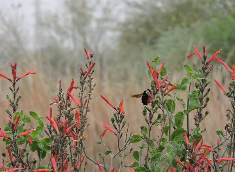
Chuparosa
Red tubular blooms hummingbirds can't resist.
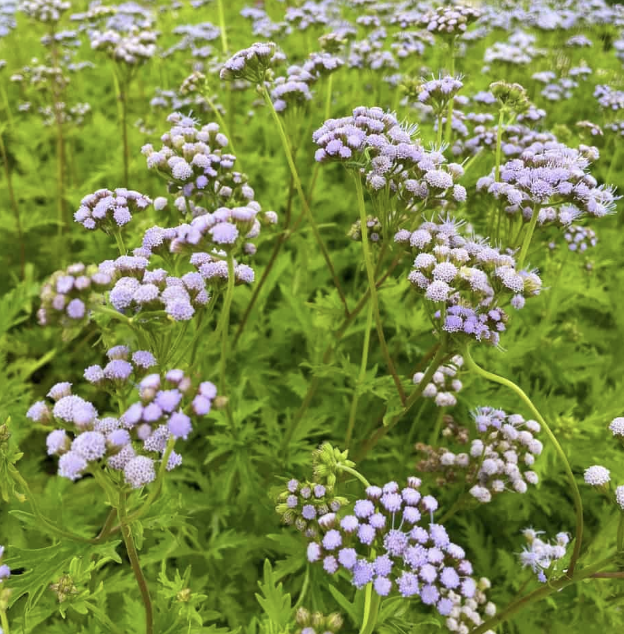
Greg's Mistflower
Fuzzy purple-blue blooms, butterflies love it.

Desert Milkweed
Tough, upright, a magnet for monarchs.

Globe Mallow
Bright orange blooms, tough and easy.

Texas Sage
Silvery foliage with purple blooms.
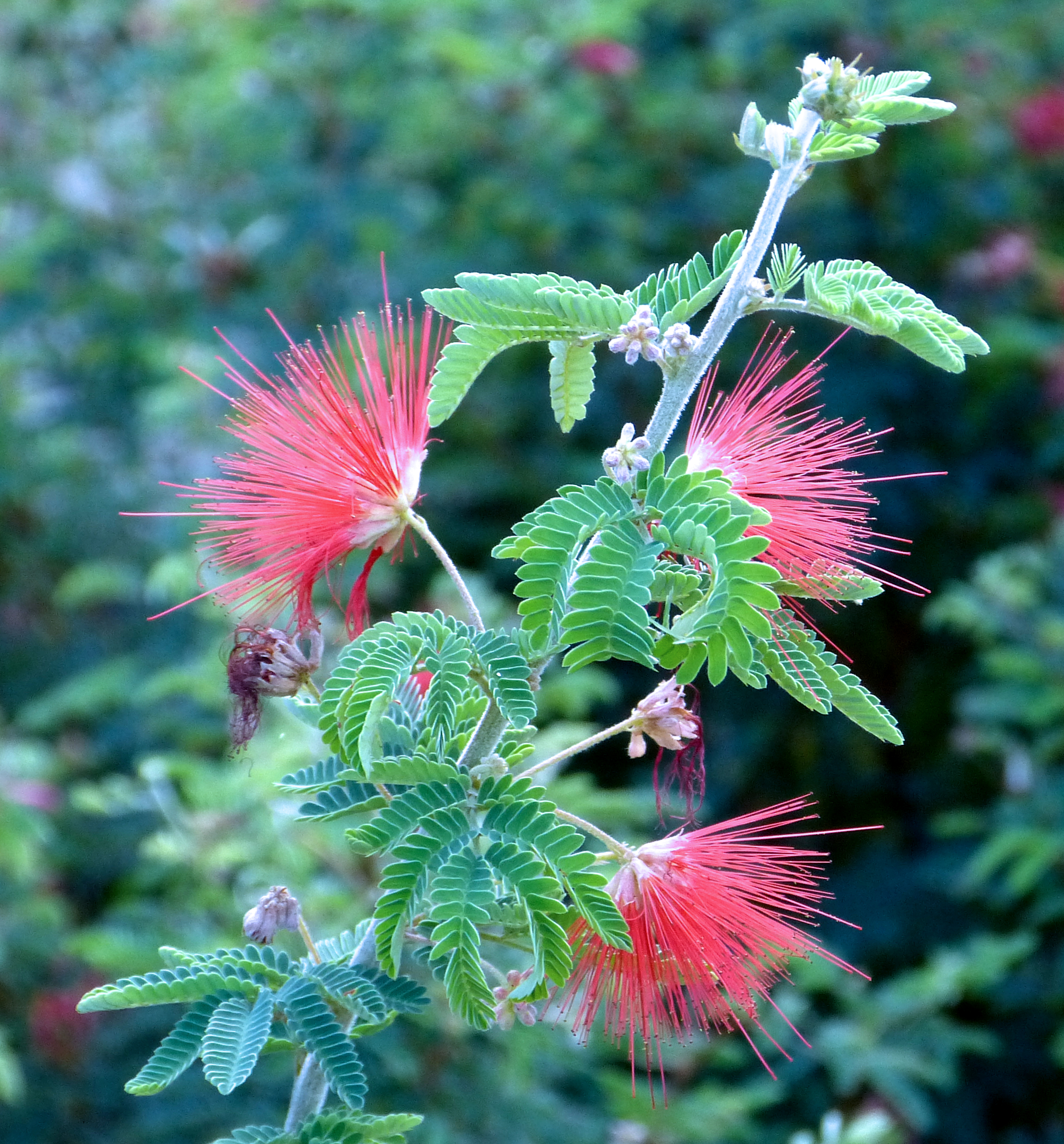
Baja Fairy Duster
Wispy red blooms, stays small and compact.
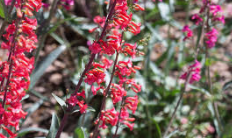
Penstemon
Tall spikes of color, great pollinator draw.
No need to use all of these, pack in whichever mix you like best.

Groundcover That Actually Handles This Much Shade
This spot up by the Vitex tree gets a lot of shade, so whatever goes in here needs to genuinely tolerate it rather than just survive it. Clover handles shade well and works nicely as a groundcover here, Dichondra is another good option if you want a softer, finer texture instead.
Clover
Handles shade well, nitrogen fixing.
Dichondra
Soft, fine-textured groundcover, handles shade well.

St. Augustine, Kurapia, or Clover
For this lawn, St. Augustine gives you that thicker, more traditional look, but it has to go in as sod rather than seed since it doesn't establish well from seed. Kurapia is the lower water option, it handles foot traffic well and stays low without needing to be mowed nearly as often. Clover is worth considering too, it's nitrogen fixing, so it actually feeds the soil as it grows, and it tends to hold up better in shadier corners of a lawn than turf grass does.
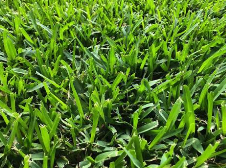
St. Augustine
Thicker, traditional lawn look, sod only, not from seed.
Kurapia
Lowest water use of the three, handles foot traffic well.
Clover
Nitrogen fixing, holds up well in shadier corners.
Happy to walk through installation and ongoing care in more detail once you've picked a direction, each of these has a slightly different approach to get established right.
Feed the Whole Property
A few spots on this list, the bougainvillea and that one mystery tree especially, are going to lean heavily on regular feeding to really turn around, and honestly the whole property will do better with it. Our monthly fertilizing program covers the full landscape with a liquid feeding each month plus compost applied a few times a year, built to build up real soil biology rather than force growth with synthetic salts.
Monthly Landscape Fertilizing
Full landscape, liquid feeding every month plus compost applied a few times a year.
Text me to get startedIf you'd rather feed things yourself in the meantime, quality compost worked in around the base once a month is always a safe, effective place to start.
Where to Go, What to Use
For compost, raised bed soil mix, and vegetable starts, visit Arizona Worm Farm. For bulk mulch, chipdrop.com is a good source, or pick some up directly from Arizona Worm Farm as well. For what to plant and when as the seasons change, my Maricopa County planting guide covers it season by season.
Let's tackle this in whatever order makes sense
There's a lot here, so pick what matters most to you first, the root flare work, the fruit trees, or the garden beds. We can advise you along the way in the Garden Nerd Club, or if you'd rather have help with any of it, planting or anything else, just reach out and I can get you pricing.
You can also read more about how we plant at thegardennerd.org.