
Your Yard, Heidi
Thanks for having me out. Here's everything we walked through, in the order we covered it, starting at the garden beds and working around the property.
You have a beautiful piece of land here and a lot of good bones already in place. Most of what follows isn't about starting over, it's about filling gaps, feeding what you have, and adding the pollinator planting you're after.
The garden bed area
Raised beds, soil, and a replacement tree for shade.
Olle beds or Vego beds both work well here

Going raised is a good decision. You get to build the exact soil you want rather than fighting caliche, drainage is better, and the height makes them far easier to work.
Both brands you mentioned are solid. I use Olle beds in my own yard, so I can tell you firsthand they hold up. Metal beds do heat up on the sides in summer, which sounds like a problem and mostly isn't as long as the bed is deep enough that roots can get away from the wall. Go at least 17 inches deep, and deeper if the option exists.
Filling them
Do not fill a raised bed with bagged garden soil from a big box store. It's sterile, it compacts within a season, and you'll be starting over next year.
- Roughly two thirds quality compost to one third native soil or a bulk garden mix. The native soil brings mineral content and structure, the compost brings the biology.
- Source it from Arizona Worm Farm if you can. Their compost is biologically alive, which is the entire difference between soil that improves every year and soil that degrades.
- Top the beds with an inch or two of compost each season rather than digging anything in. Beds settle, and surface feeding is how you keep them going.
- Mulch the surface between plantings to hold moisture and protect the soil life.
Replacing the palo verde that was here
Losing that tree matters more than it might seem. Vegetable beds in Scottsdale need afternoon shade to make it through summer at all. Without it you're looking at a garden that produces from October to May and then cooks.
You want the largest canopy you can get, positioned to the west or southwest of the beds so it blocks afternoon sun while leaving morning sun open. Morning sun is what vegetables want. Afternoon sun in July is what kills them.
Desert Museum palo verde is my first pick, and it's essentially what was there. It's thornless, it's the fastest growing of the palo verdes, it throws exactly the kind of filtered dappled shade vegetables like, and it gets big.
Red push pistache is worth a serious look too. Broad rounded canopy, real fall color, and because it's deciduous it drops its leaves in winter and lets full sun back onto the beds right when your cool season crops want it. That seasonal switch is genuinely useful over a vegetable garden. Mesquite is the third option if you want the widest canopy of the three.
The two things that decide whether a tree thrives
The second thing is the root flare. That's where the trunk widens out into the main roots, and it has to sit at or slightly above finished grade. A buried flare is the single most common reason trees here struggle for years and then decline, and it's entirely avoidable at planting.
If the video doesn't load, watch it here: youtu.be/mLCVVxdvxU8
- Find the flare in the container first. Nurseries routinely have soil piled over it, so scrape back until you can see where the trunk widens.
- Dig wide, not deep. Two to three times the container width, no deeper than the root ball.
- Correct circling roots at planting. Far easier now than in five years.
- Backfill with the native soil that came out of the hole. Don't amend it.
- Compost on the surface, then mulch out to the drip line, both held a foot back from the trunk.
- Water deep and infrequent so roots go down instead of sideways.
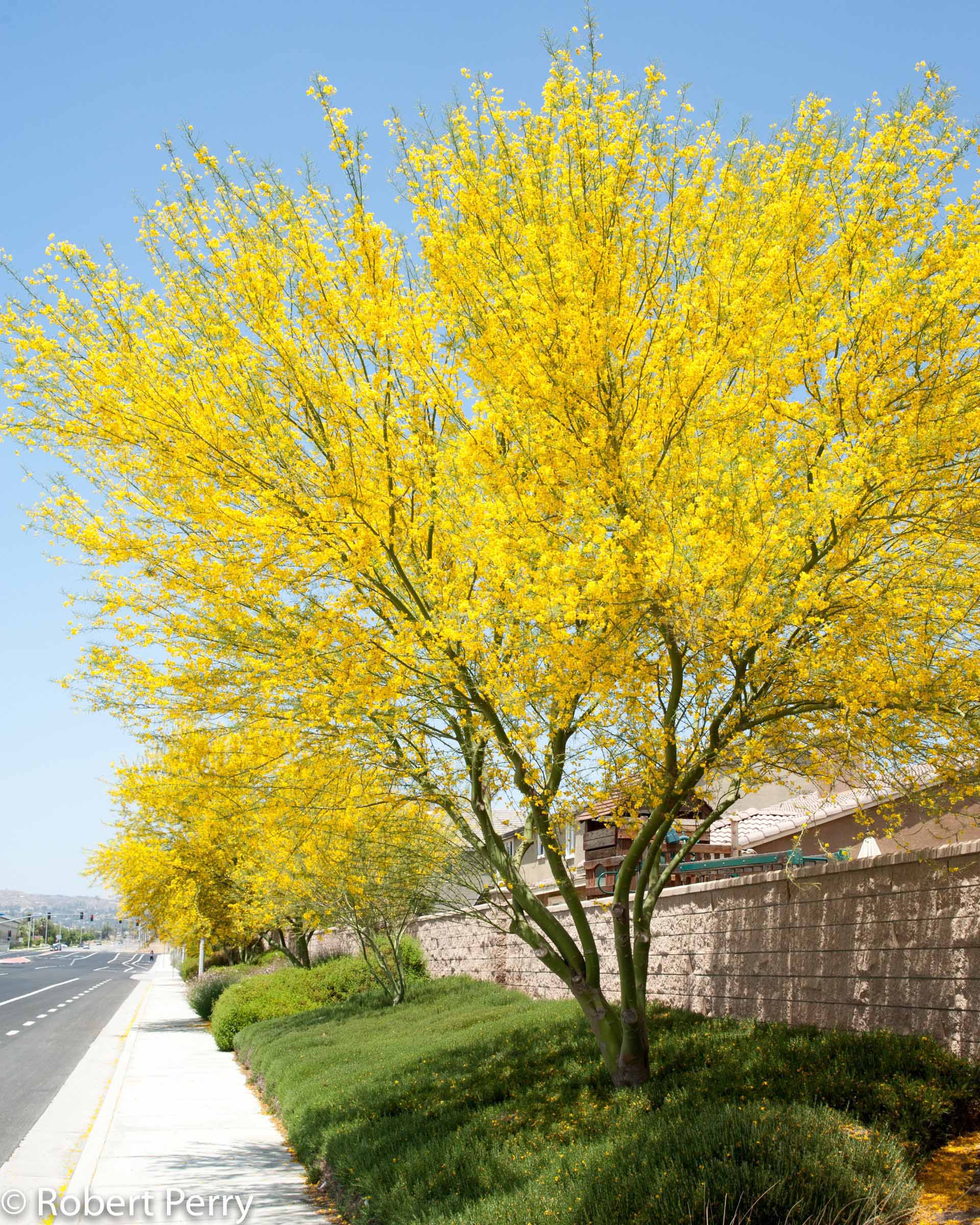
Desert Museum Palo Verde
Thornless hybrid with green trunks and heavy yellow bloom in spring. Fast, reaching 20 to 25 feet with a broad open canopy. Doesn't need much water once established.
The filtered shade it casts is close to ideal over vegetable beds. This is essentially replacing what you lost, with a better version.
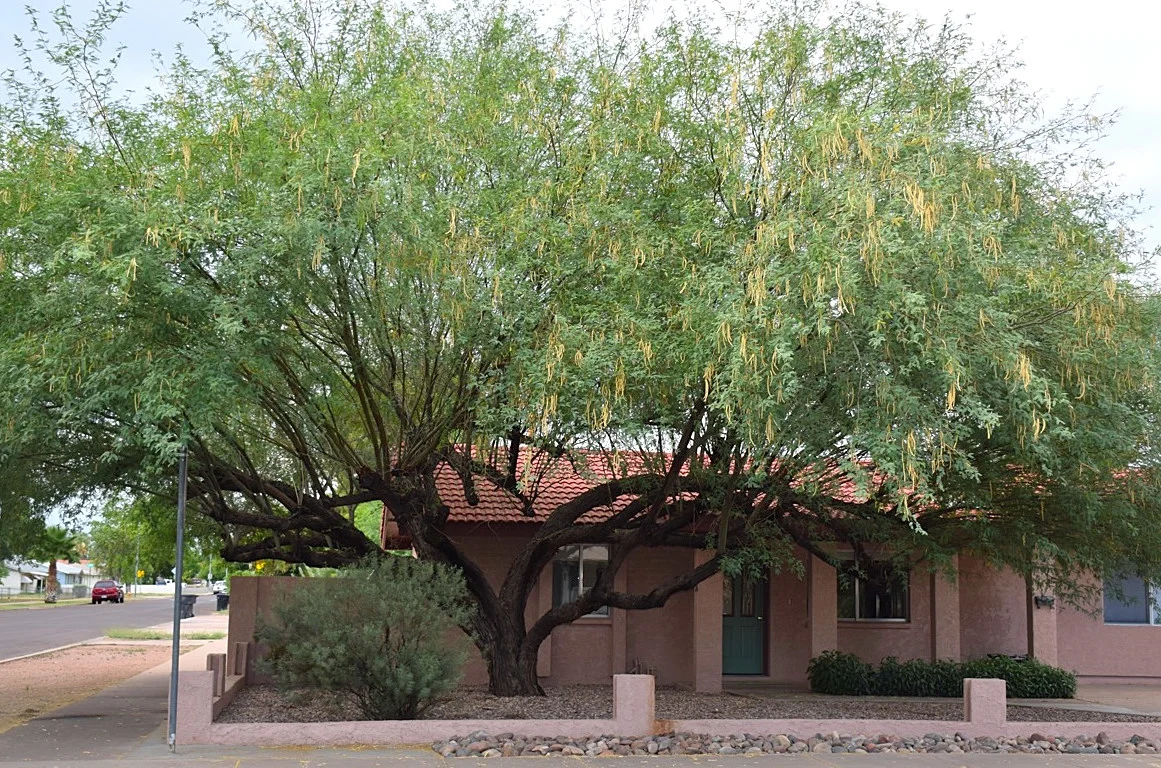
Mesquite
Broad spreading canopy reaching 25 to 30 feet, with fine foliage that filters light beautifully. Extremely tough and long lived here.
Ask for a thornless variety. Wider canopy than the palo verde, slightly slower to get there.

Red Push Pistache
Broad rounded canopy reaching 25 to 30 feet, with real red and orange fall color. Non invasive roots and no fruit drop.
Deciduous, so the beds get shade all summer and full sun through the cool season. Doesn't need much water once established.
The easement behind the fence
Large shade trees to block the west sun without losing the view.
Two large mesquites, high canopy

This is the highest value planting on the property. Afternoon sun off the west is what makes a house here expensive to cool and a patio unusable from May through September. Two large canopies in the right spot changes that more than anything else you could do.
The thing that makes this work rather than trading one problem for another is canopy height. You want trees limbed up over time so the shade lands where you need it and your sight line out to the desert stays open underneath. That's a normal part of how these trees develop, and it's worth telling whoever prunes them that this is the goal.
Mesquite is the right call. Broad canopy, fine foliage that filters rather than blocks, extremely tough, and native to this landscape so it looks like it belongs out there rather than like something imported.
Plant these the same way described in Area One. Smaller stock, flare above grade, native soil backfill, compost and mulch on the surface held back from the trunks.
Mesquite
Broad spreading canopy reaching 25 to 30 feet and just as wide. Fine foliage filters light rather than blocking it completely. Doesn't need much water once established.
Ask for thornless. Native to this landscape, so it reads as part of the view rather than an addition to it.
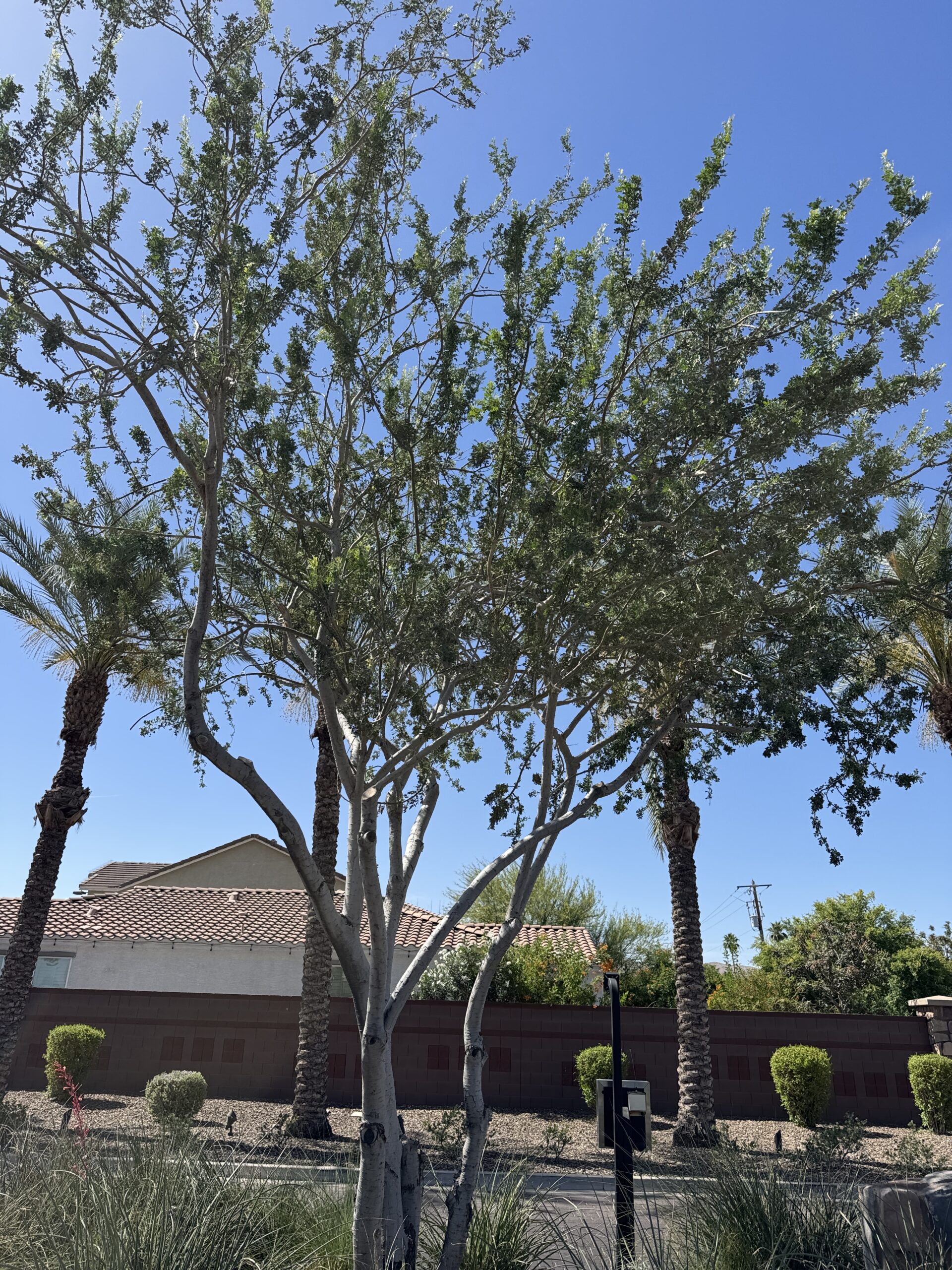
Desert Ironwood
Sonoran native, evergreen, with a dense rounded canopy reaching 20 to 25 feet and lavender pink flowers in late spring. Slow, and among the longest lived trees in the desert.
Denser shade than mesquite. Worth the patience, but plan for slow.
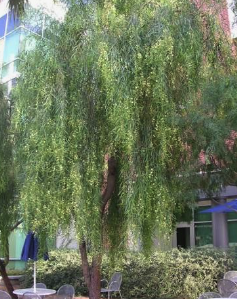
Willow Acacia
Fast growing evergreen with weeping narrow foliage, reaching 25 to 30 feet. Upright rather than spreading.
The fastest of the three to give you shade, though the narrower shape means you'd want more of them.
The pollinator garden
Where the roses were.
Fix the irrigation before anything goes back in

Those roses died because the irrigation went out, which means the exact same thing will happen to whatever replaces them if the system isn't sorted first. Natives are far more forgiving than roses, but nothing establishes without water in its first year.
I work with Garrett on irrigation. He'll inspect the zone, find what failed, and repair it before we plant anything. Worth getting him out first.
Garrett, 480-678-9121.
A native pollinator planting
This bed is a good candidate for going fully native. Desert milkweed, Greg's mistflower, and chuparosa are the three nectar and host plants I'd build around, and between them you'll have something flowering across most of the year rather than one big spring show and then nothing.
For groundcover, blackfoot daisy is the most natural fit. Yellow dot and purple heart are both options if you want faster coverage or more color, though neither is native.
San Marcos hibiscus is worth adding for additional color. It's a desert adapted hibiscus that gives you real flowers without the water demand of a tropical one.
Plant in groups rather than one of each. Pollinators find and work a cluster far more readily than a single plant, and it looks considerably better.
Prep is the same as everywhere: rock pulled back, compost laid on top of the soil, mulch over the compost, held a foot back from any trunk.

Desert Milkweed
Upright silver green stems with a sculptural look and small cream flowers. Native, and it needs almost nothing once established.
Host plant for monarch and queen butterflies. Plant it and you'll get caterpillars, which is the entire point.
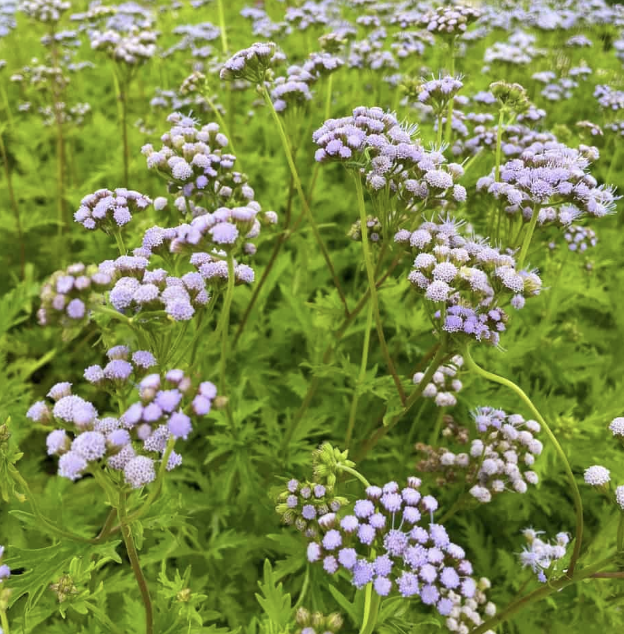
Greg's Mistflower
Soft lavender blue puffs over low mounding foliage, blooming heaviest in fall when most things have finished.
The best butterfly plant on this list by a wide margin. It gets completely covered.
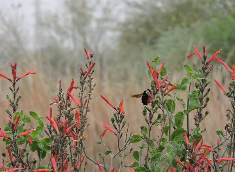
Chuparosa
Sonoran native with red tubular flowers through the cool season into spring, on an open airy frame.
Hummingbirds work this constantly, and it blooms when the yard needs it most.
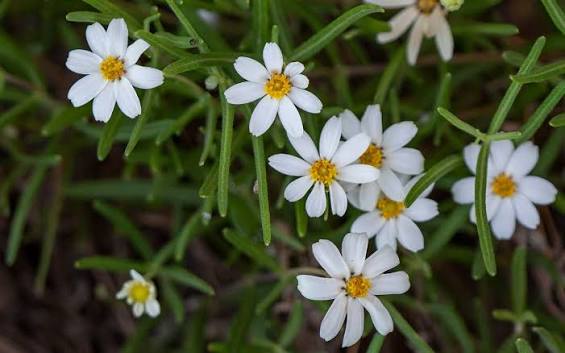
Blackfoot Daisy
Low mounding native with small white daisy flowers most of the year. Very low water and very tough.
The most natural groundcover choice for a native bed.

Yellow Dot
Fast low spreader with small yellow flowers most of the year. Covers ground quicker than anything else here.
Not native, and it will keep spreading, so give it an edge to grow against.

Purple Heart
Deep purple stems and leaves with small pink flowers. Takes sun or part shade and comes back hard after frost knocks it down.
The color does a lot of work against all the greens and silvers in a native bed.
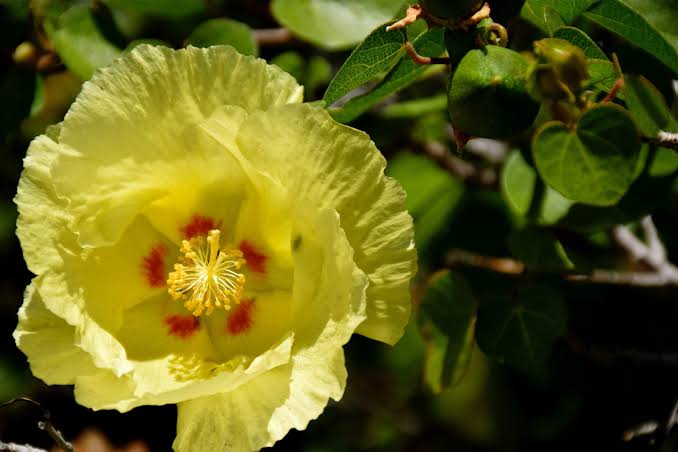
San Marcos Hibiscus
Bright yellow flowers with a red center over glossy round leaves, blooming through the warm months. Compact at 3 to 4 feet.
Real hibiscus flowers without tropical hibiscus water needs.
The hibiscus pot
A swap that will hold up much better.
San Marcos hibiscus instead

Tropical hibiscus is a heavy feeder with shallow roots that wants consistent moisture and afternoon relief. In a pot in full sun here, that's a plant on life support. It'll survive, but it will always look like it's working hard.
San Marcos hibiscus gives you the same flower shape and real color, but it's desert adapted. It takes sun and heat that would cook a tropical, and it needs a fraction of the water. It's the version of this plant that actually enjoys living here.
While you're swapping it
- Refresh the soil rather than replacing it. Scrape off the top few inches and add a good layer of fresh mix and compost on top. No need to dump the pot out.
- Use a living soil blend from Arizona Worm Farm. In a container this matters more than anywhere else, since there's no surrounding soil to buffer a poor mix.
- Check the drain holes are clear while you're in there.
- Top dress with compost a couple of times a year. Pots leach nutrients fast because you water them so often.
San Marcos Hibiscus
Bright yellow flowers with a deep red center, blooming through the warm months over glossy rounded leaves. Compact at 3 to 4 feet and evergreen in mild winters.
Takes full sun and heat without complaint. Doesn't need much water once established.
Along the pool fence
A hedge that stops at the top of the fence.
Continue the hopseed, but keep it low

The large hopseed at the end has gotten taller than you want, which is what hopseed does if nobody stops it. That isn't a reason to pick a different plant. It's a reason to prune on a schedule.
Continuing hopseed all the way down the fence gives you a continuous hedge that will fill in fast and hold at whatever height you decide. Trimmed once or twice a year it will sit comfortably at five or six feet, right at the top of the fence, which keeps the desert view open above it.
If you'd rather not commit to that pruning schedule, Arizona rosewood is slower and naturally stays more in bounds, and orange jubilee brings color. Any of them can run together along the same fence. A couple of others worth considering below.
- Space them 3 to 4 feet apart for a hedge that closes up rather than staying as separate shrubs.
- Prune in late winter, before spring growth. One good cut a year does more than constant shearing.
- Don't shear them into boxes. Cut back to a branch rather than flat across the top. They stay fuller and flower more.
- Rock back, compost on the surface, mulch over it, held a foot back from stems.

Hopseed
Upright evergreen with narrow willow like leaves. Will reach 12 to 15 feet unpruned, and holds beautifully at 5 to 6 feet with one cut a year.
Fastest to fill in, densest screen, and it already grows well here.

Arizona Rosewood
Native evergreen with dark leathery leaves and a clean upright form. Slower than hopseed and less demanding to keep in bounds.
The choice if you want less pruning on the calendar.
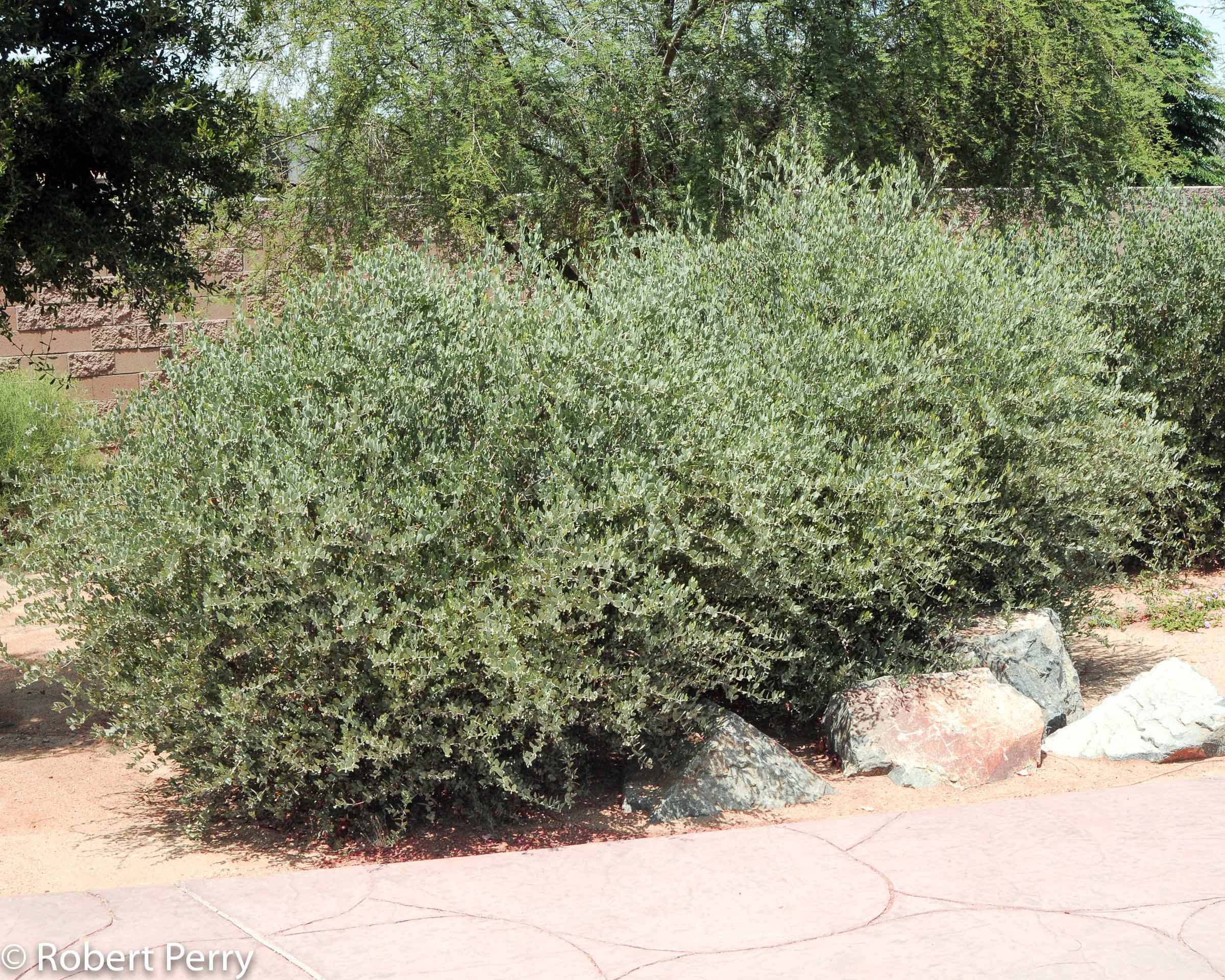
Jojoba
Sonoran native evergreen with thick gray green leaves, naturally settling around 5 to 6 feet. Almost no water once established.
Worth serious consideration here. It stops at the height you want on its own, so there's no pruning schedule at all.

Orange Jubilee
Orange trumpet flowers through most of the year on an upright shrub reaching 8 to 10 feet. Cuts back hard in late winter.
One of the few things that keeps blooming through a Phoenix summer.

Texas Sage
Silver gray foliage with purple flowers that burst out after humidity or rain. Settles around 4 to 6 feet.
Leave it unsheared. It looks far better loose and flowers considerably more.
The citrus trees
They need soil under them and a feeding schedule.
These are running on empty

Citrus are heavy feeders. They're carrying fruit, pushing new growth several times a year, and doing it in soil that has nothing in it. What you're seeing is trees getting by rather than producing.
The fix isn't complicated and it isn't a bottle of anything. It's mulch, compost, and a schedule.
What to do
- Compost first, on top of the soil. An inch or two spread from a foot away from the trunk out to the drip line. Don't dig it in. Water and soil life will carry it down.
- Then three to four inches of wood mulch over the compost, out to the drip line and beyond if you can. Keep it a foot back from the trunk.
- Repeat the compost three times a year. Roughly February, June, and October. The mulch gets topped up once a year as it breaks down.
- Water deep and infrequent. Citrus want a long slow soak out at the drip line, not a daily sprinkle at the trunk. Roughly every 7 to 10 days in summer, every 3 to 4 weeks in winter.
- Never pile mulch or soil against the trunk. Citrus are grafted, and burying the graft union invites rot and can kill the tree outright.
Do this consistently and you'll see it in the leaf color first, then in the fruit set the following season. Compost feeds the biology in the soil, and that biology is what makes minerals available to the tree. That's a durable fix rather than a rented one.
The root flares need to come out from under the soil
These citrus are buried. The root flare is where the trunk widens out into the main roots, and it's supposed to sit above the soil line where you can see it. On these it's covered, which means trunk bark is sitting damp, decay has a way in, and roots are circling the trunk instead of heading away from it. Over years those circling roots strangle the tree.
It also matters a great deal on citrus specifically because of the graft union. Burying it lets the rootstock take over or invites rot right at the weakest point of the tree.
Here's a short video showing what this looks like and how it gets fixed.
If the video doesn't load, watch it here: youtu.be/mLCVVxdvxU8
- Use a hose on a jet setting to wash soil away rather than a shovel near the trunk. Steel tears bark and roots.
- Work outward in layers, an inch or two at a time, all the way around the trunk.
- Stop when the trunk visibly widens and you can see the tops of the main roots leaving it.
- Leave it exposed. Don't backfill. The compost and mulch go on afterward, held a foot back from the trunk.
- Do this October through March while the trees aren't under heat stress.
The white grapefruit isn't coming back
That one is past the point where care makes a difference. Even doing everything right, it isn't going to recover into a productive tree. The honest recommendation is to take it out and replace it rather than nursing it.
The good news is that the spot is already established, and a young citrus going into ground you've started composting will get up to speed quickly.
Our fertilizing program
We come out every month with a liquid biological blend and put it on the citrus. Three times a year we bring compost and top dress underneath them, which is the piece that actually rebuilds soil over time rather than just feeding what's already there.
After every visit we send a short recap video so you can see what we did and anything we noticed on the trees.
The citrus trees
This price covers the citrus trees only, not the rest of the landscape. No contract, cancel any time. Feeding and soil building only, and does not include the planting, excavation, or cleanup work described in this write-up. If you'd like the whole property on the program, I can put a number together for that.

Citrus
Evergreen, fragrant in bloom, and productive here for decades with the right soil under them.
Greenfield Citrus in Mesa is where I'd send you. They grow their own and the quality is a real step up from a big box tree.
A tree at the front of the house
East facing, and it takes a lot of morning sun.
Desert willow

This spot wants a tree that softens the front of the house without swallowing it. Desert willow is my first pick for exactly that. It stays in the 15 to 25 foot range, has a light open habit, and throws trumpet flowers in pink and burgundy from spring right through fall.
It's also a hummingbird magnet, which is a nice thing to have happening right by the front door.
One thing to know going in: it's deciduous, so it drops its leaves and stands bare through winter. Some people love the branching structure, some don't. Worth deciding which camp you're in before planting.
If you'd rather have something evergreen, Texas olive holds its leaves in mild winters and gives you big white flowers most of the year. Cascalote is a third option worth considering, and it's the unusual one of the three because it flowers through winter rather than summer.
Plant it the same way as described in Area One.
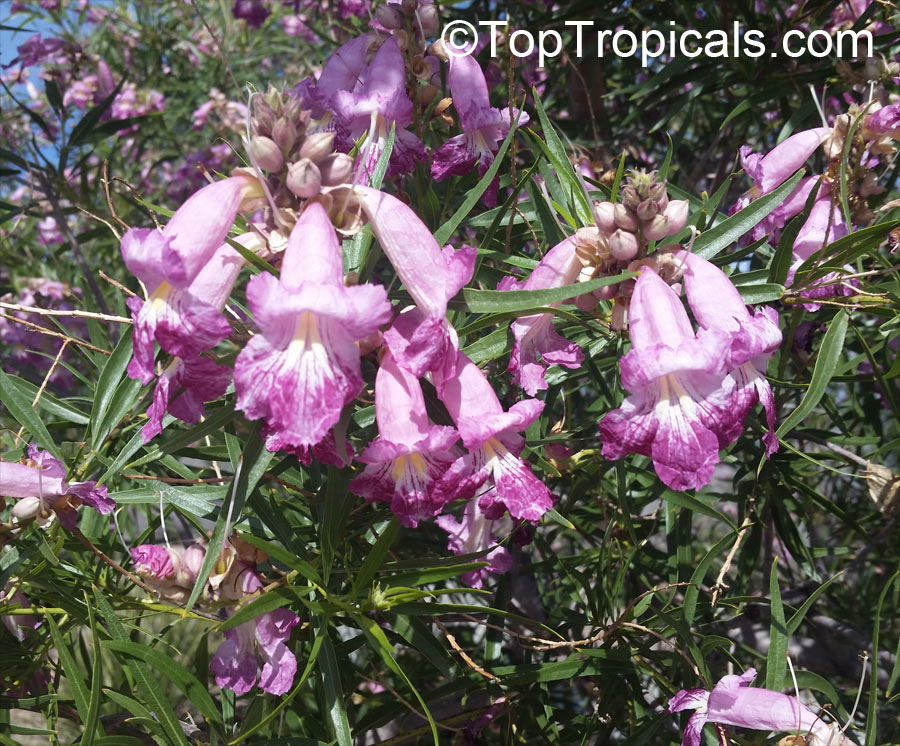
Desert Willow
Native with narrow willow like leaves and trumpet flowers in pink through burgundy, blooming spring through fall. Reaches 15 to 25 feet with an open airy habit.
Doesn't need much water once established. Deciduous, so expect bare branches in winter.

Texas Olive
Large white crepe paper flowers with yellow throats over broad green leaves, blooming spring through fall. Reaches 15 to 20 feet.
Evergreen in mild winters, which is the main argument for it over the desert willow. Frost may nip it in a hard year but it recovers.
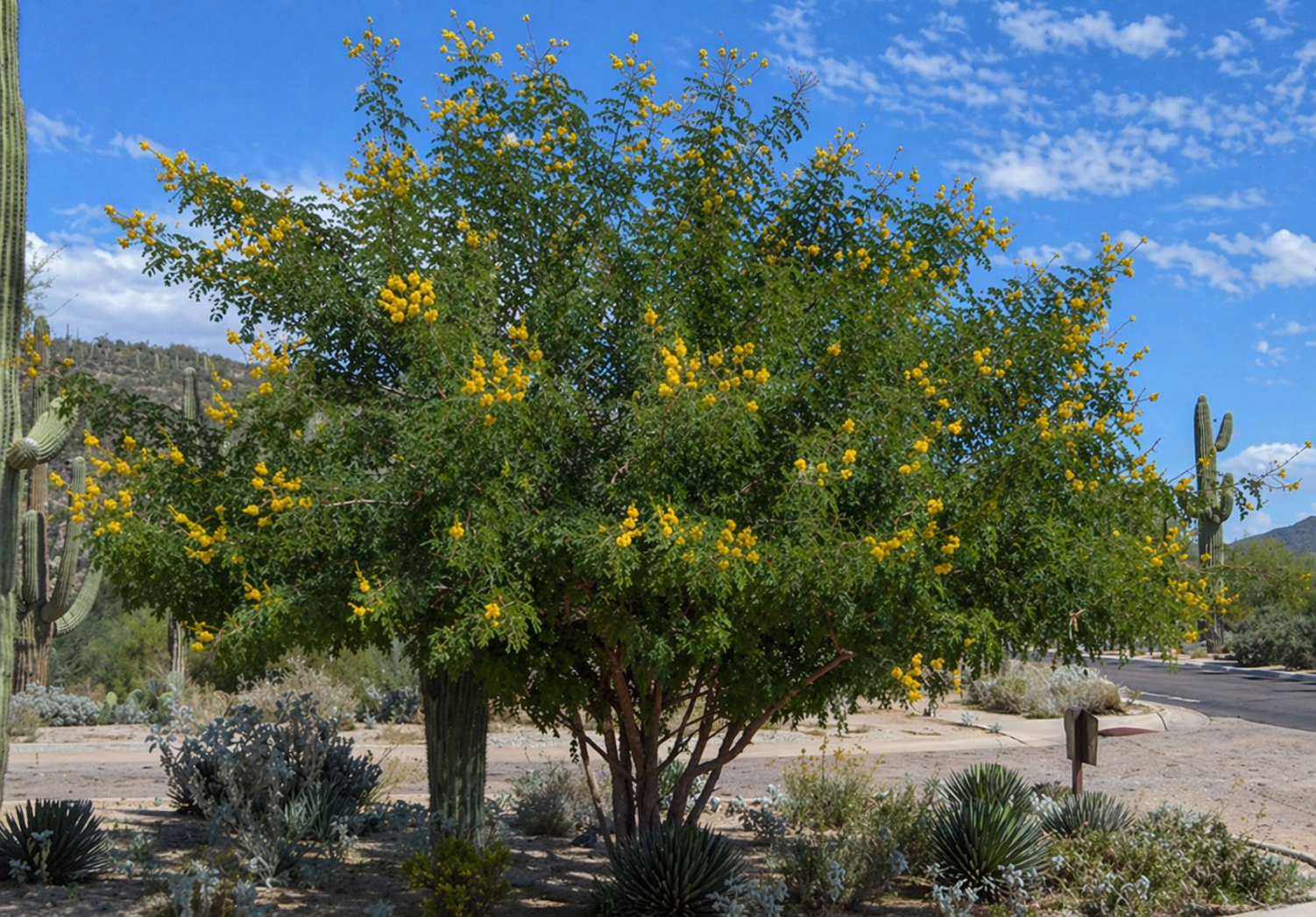
Cascalote
Upright yellow flower spikes right through winter, followed by decorative seed pods. Compact at 15 to 20 feet and evergreen. Doesn't need much water once established.
Blooming in December and January is genuinely rare here. Ask for a thornless variety like Smoothie, since the species carries serious thorns on the trunk.
The top of the mound
Something with presence, but not a tree.
A flowering shrub in the three to five foot range

A mound is a natural high point, so whatever goes up there becomes a focal point whether you intend it or not. You want something that earns that position: real flower presence, pollinator value, and a form that looks good year round rather than only in bloom.
Red bird of paradise is my first pick. It gives you the most flower presence of anything at this scale, and it blooms hardest in July and August when the rest of the yard has gone quiet. Cut back once a year it holds comfortably in your size range.
Brittlebush and pink fairy duster are the other two worth considering, both natives and both softer in character. Any of the three would do the job, so it's mostly a question of what you want that high point to say.
Prep matters more on a mound than almost anywhere, since raised ground sheds water and dries from the top. Rock back, compost on the surface, and a good layer of mulch to slow water down long enough for it to soak in instead of running off the side.
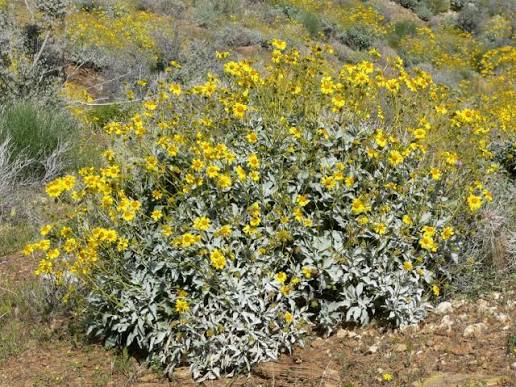
Brittlebush
Silver gray mounding native topped with yellow daisies on tall stems in spring. Around 3 feet, sometimes more.
The silver foliage reads beautifully on a raised spot. Very low water and very native.
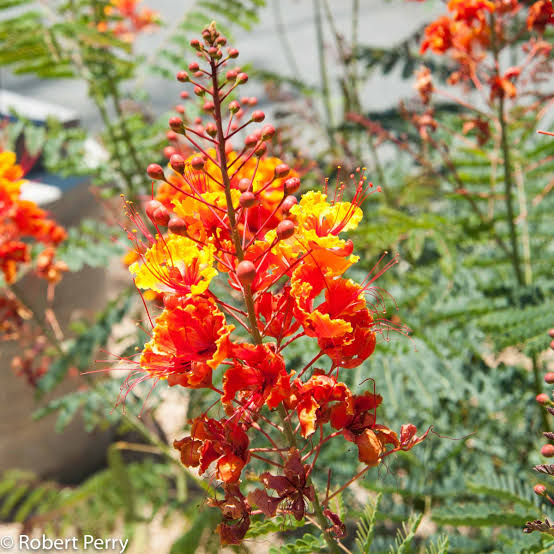
Red Bird of Paradise
Orange and red flower clusters all summer long. Will reach 6 to 8 feet if left alone, and holds at 4 to 5 with an annual cut back.
One of the few things that blooms hardest in July and August. Frost knocks it down and it returns every spring.
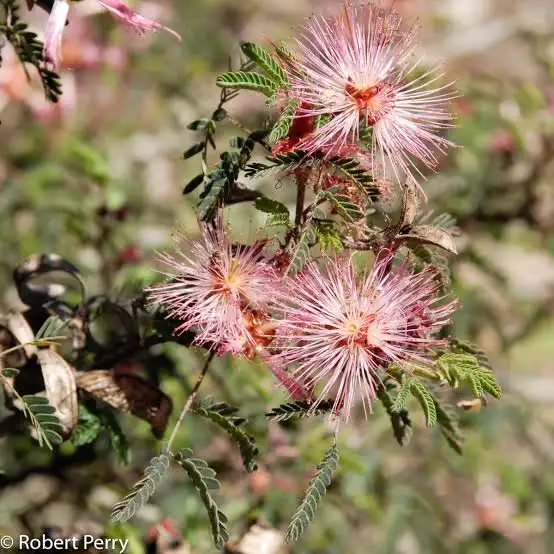
Pink Fairy Duster
Soft pink powderpuffs in spring and again after summer rain, over fine airy foliage. Lower and looser at 2 to 3 feet.
Native, and a softer look than the Baja if you want the mound to blend rather than stand out.
The whole front of the house
East facing, and it needs covering.
Cover this area to add color and cool the house

This is doing two jobs at once. The obvious one is color and greenery across a stretch that's currently blank. The less obvious one is temperature. Rock against a stucco wall absorbs morning sun and radiates it into the house all day. Planted ground covered with mulch does the opposite, holding moisture and staying substantially cooler.
East facing is a good exposure to work with. You get strong morning sun and relief in the afternoon, which opens up plants that would struggle on a west wall.
Ruellia is a solid first option and I'd anchor with it. It flowers spring through fall, spreads to fill space, and handles this exposure easily. A few more below, all desert adapted, all colorful, all pollinator plants.
Pick two or three and repeat them across the run rather than planting one of each. Repetition along a house front looks deliberate. A collection of singles looks like leftovers.
Torch glow bougainvillea is worth calling out specifically. It has the color of a regular bougainvillea but grows upright in a tight column rather than sprawling everywhere, which makes it much easier to use against a house.
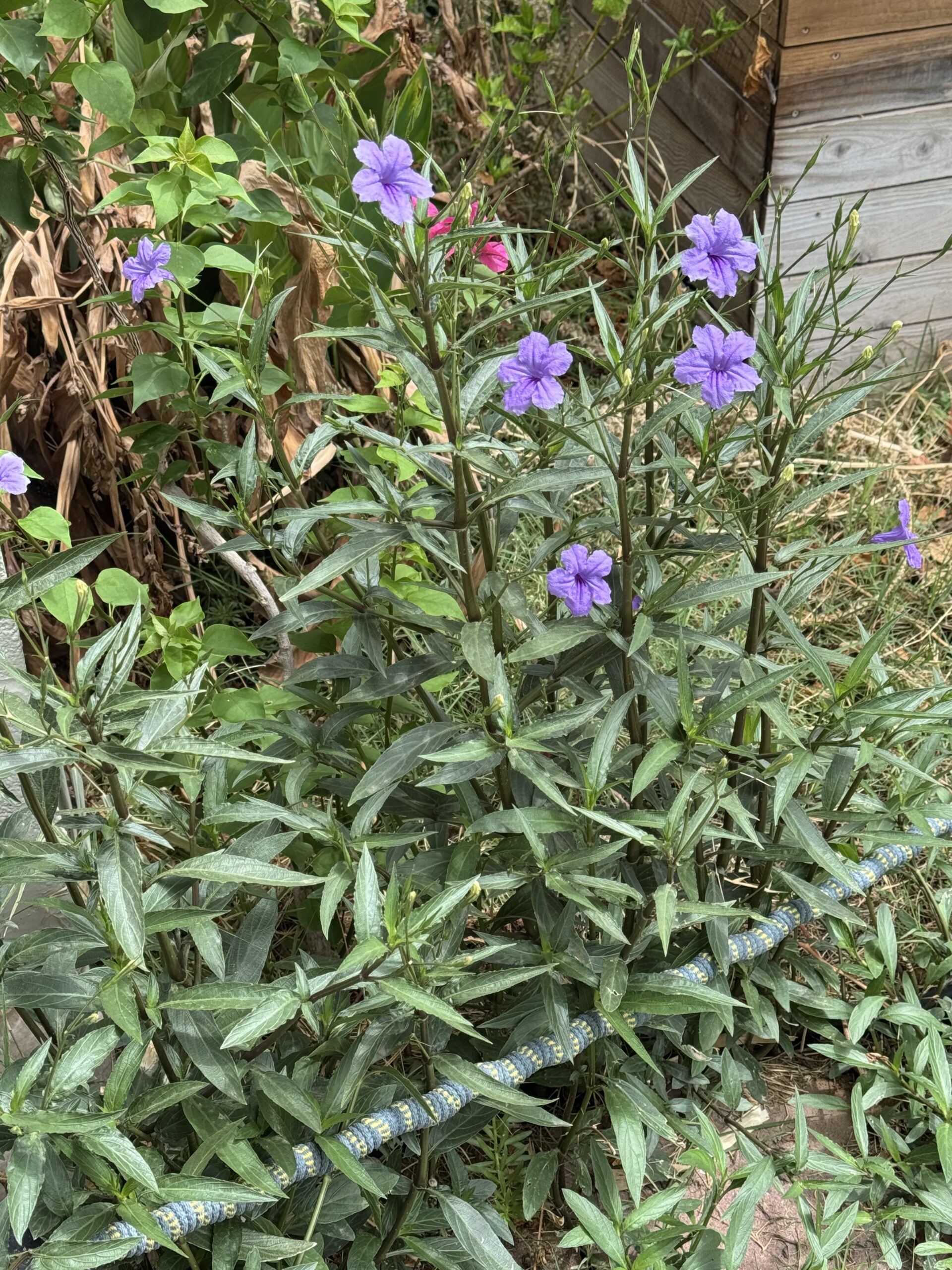
Ruellia
Purple trumpet flowers over deep green foliage, blooming spring through fall. Spreads to fill space and takes sun and heat easily.
One of the most reliable long bloomers we have, and it fills a bed faster than almost anything.

Globe Mallow
Silver gray foliage covered in orange cup flowers through spring, with repeat bloom after rain. Native and very low water.
Native bees work this one hard. Cut it back after flowering and it returns fuller.
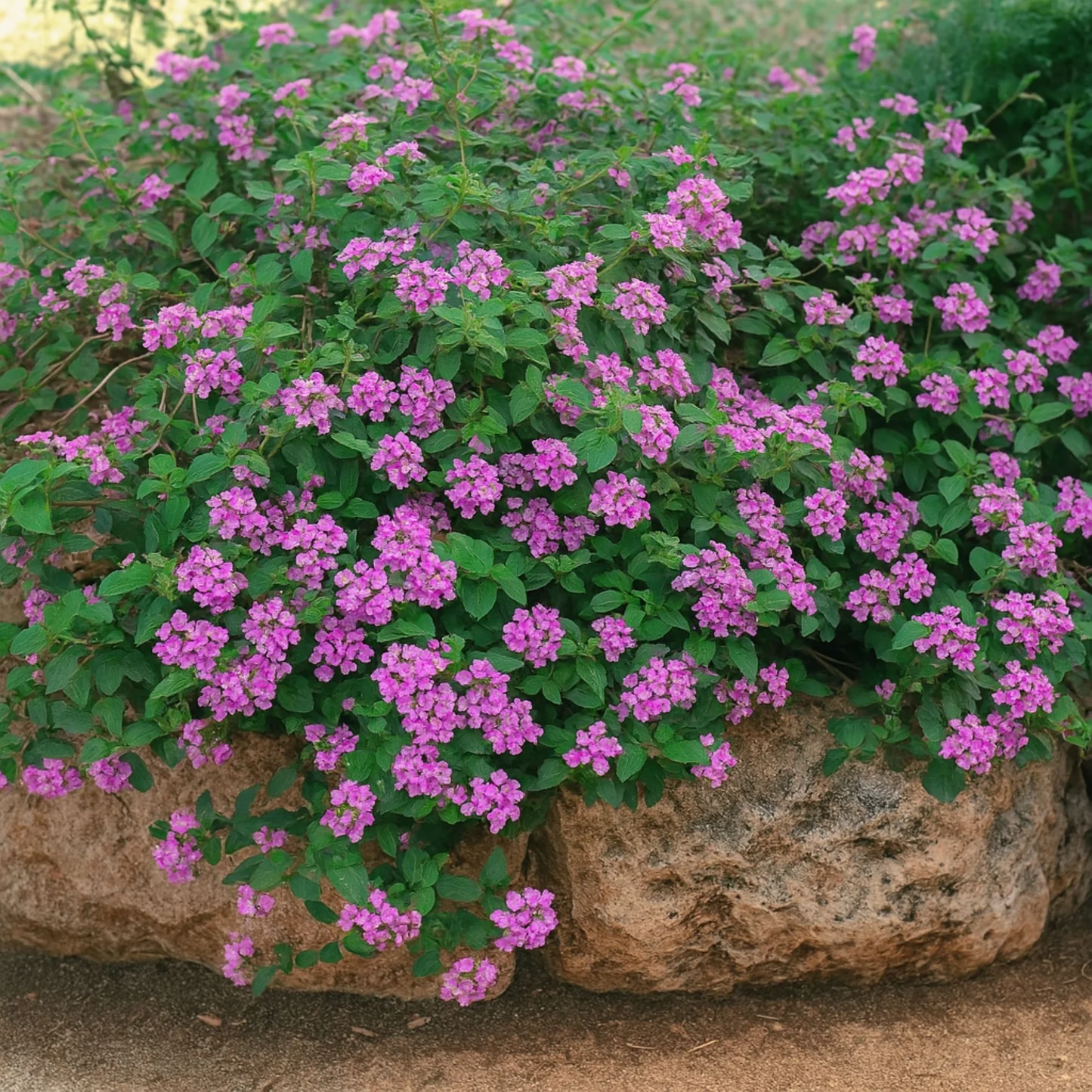
Trailing Lantana
The fastest way to cover ground on this list. Purple or white flowers nearly year round.
Frost knocks it back and it returns in spring. Cut the dead growth off in February.

Torch Glow Bougainvillea
An upright bougainvillea rather than a sprawling one, with hot pink bracts held in clusters right along vertical stems. Reaches 4 to 6 feet and stays where you put it.
All the color bougainvillea is known for without the sprawl, which makes it far easier to use along a house front. Frost sensitive, so it wants a warm spot.
The Baja fairy dusters
One more to make three.
Add a third to the west and let them be

There's an empty spot to the west of the two you have, and filling it gives you three in a row. Odd numbers and even spacing are most of what makes a planting look designed rather than accidental, and this is a one plant fix.
If they need pruning at all, it should be selective cuts back to a branch, once a year in late winter. Not a hedge trimmer. This applies to the Texas sage and most other flowering shrubs on the property too.
Same prep as everywhere. Rock back, compost on top of the soil, mulch over the compost.
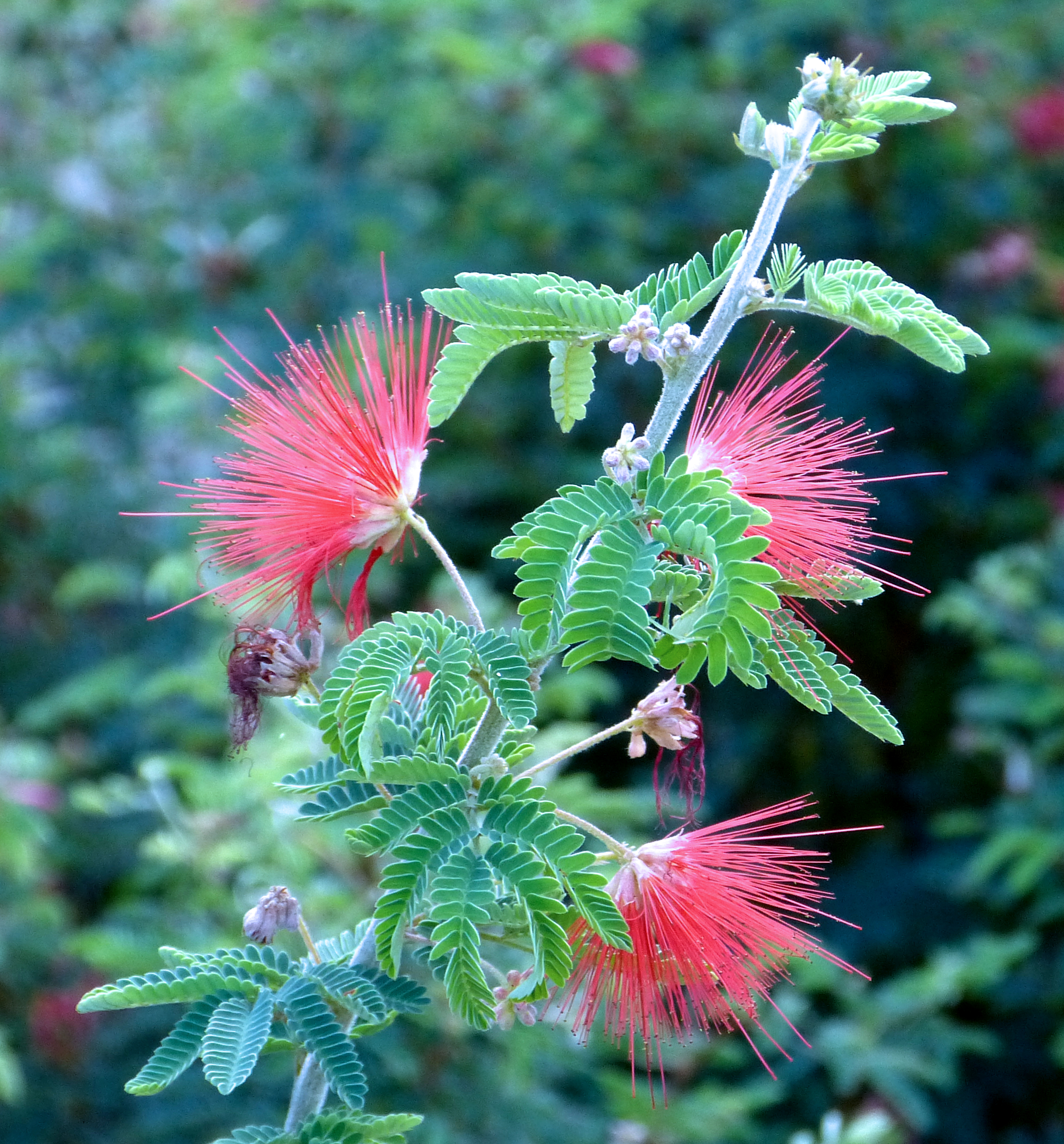
Baja Fairy Duster
Bright red powderpuff flowers nearly year round over fine feathery foliage. Settles at 4 to 5 feet if left alone.
Match the size to what you have so all three read as a set rather than two established plants and a newcomer.
The agave pups
Free plants, if you move them at the right time.
October through April, and never in summer

Those pups are clones of the parent plant, already rooted, and they'll transplant readily. The one thing that gets people into trouble is doing it at the wrong time of year.
October through April is the window. Fall is ideal, because the soil is still warm enough for roots to move but the plant isn't fighting heat while it recovers. Avoid June through August entirely. A freshly cut agave in July has an open wound and no root system in 110 degree soil, which is how you lose them.
Digging them out
- Pick pups that are worth taking. Anything six inches across or bigger with a few leaves of its own. Smaller ones transplant fine but take much longer to become anything.
- Wear gloves and eye protection. Agave tips are genuinely dangerous and the sap irritates skin on a lot of people.
- Dig a circle around the pup, six to eight inches out, working down rather than levering sideways.
- Find the rhizome, the underground stem running from the mother plant to the pup. Follow it back with your fingers.
- Cut it clean with a sharp spade or a knife, close to the mother plant. A clean cut heals. A torn one invites rot.
- Lift the pup with whatever roots came with it. If it has none, that's fine. Agave pups root readily from the base.
Let them cure before planting
Do not plant them straight into the ground. The cut end needs to callus over first, and putting a fresh wound into moist soil is the fastest way to rot a succulent.
- Set them in a shaded, dry spot for 5 to 7 days. On a bench, in a garage, anywhere out of direct sun with airflow around them.
- Wait until the cut looks dry and sealed over before it goes in the ground. It'll be obvious.
- Don't water them while they're curing. They're storing everything they need in those leaves.
Getting them in the ground
- Dig a shallow hole, only as deep as the base of the plant. Agaves rot if planted too deep.
- Native soil only. No compost in the hole and no amendments. These want lean, fast draining ground.
- Set the crown at or slightly above grade. Never let soil sit up in the leaf bases.
- Stake them if they're wobbly with a couple of rocks around the base rather than anything driven into the roots.
- Wait a week before the first water. Then water deeply once, and let it dry completely before watering again.
- Once a month is plenty through the first cool season. Back off to almost nothing once established.
- Mulch is optional here and should be kept well off the plant. Gravel around the base is fine and looks right.
Give them a season and you won't be able to tell which ones were transplanted.
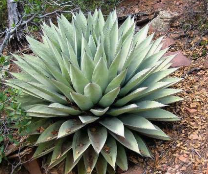
Agave
Architectural, evergreen, and essentially permanent once established. Needs almost no water.
Every pup you move is a free plant that's already proven it grows on this property.
Filling the gap
Screening the view in both directions.
Desert ironwood, one for certain and possibly two

You want to break the sight line between you and the neighbors without closing the whole thing off, and desert ironwood is well suited to that. It's evergreen, so it works year round rather than screening for eight months and disappearing in winter. It has a dense rounded canopy that genuinely blocks a view. And it's a Sonoran native, so it reads as part of this landscape rather than as a privacy hedge.
One will do real work in that gap. Two, offset rather than in a line, will close it properly and look far more natural than a single specimen sitting in the middle.
The trade off is speed. Ironwood is slow, and slow means slow. If you want screening sooner, the options below get there faster, and there's an argument for planting a fast one alongside the ironwood and removing it later once the ironwood fills in.
Plant these the same way as described in Area One.
Desert Ironwood
Evergreen Sonoran native with a dense rounded canopy reaching 20 to 25 feet, and lavender pink flowers in late spring. Among the longest lived trees in the desert.
Slow growing, but the best year round screen on this list and the one that belongs here.

Mulga Acacia
Dense evergreen with silver gray foliage, reaching 15 to 20 feet. Naturally full to the ground, which is exactly what you want for screening.
Faster than ironwood and screens lower. Very low water.
Willow Acacia
Fast growing evergreen with weeping narrow foliage, reaching 25 to 30 feet. Upright and narrow.
The quickest screen here. Plant two or three since each one covers less width.
Arizona Rosewood
Native evergreen with dark leathery leaves, reaching 10 to 15 feet. More large shrub than tree.
Good underneath or alongside a tree to screen the lower portion where a canopy doesn't reach.
Under the mesquite in the side yard
All that empty space, filled with natives.
A native pollinator planting in the filtered shade

Filtered shade under a mesquite is genuinely valuable ground here. Soil temperatures stay lower, moisture holds longer, and the tree drops leaf litter that feeds the soil for free. In the wild, this is exactly where desert plants concentrate. There's a name for it, the nurse plant effect, and it's why you see so much growing under mesquites and palo verdes out in the desert and so little in the open between them.
So this space wants to be planted, and almost everything below will do better here than it would in full sun.
Below is the full list rather than a short one, so you can pick what appeals. My honest advice is to choose three or four and plant several of each rather than one of everything. Pollinators find and work a cluster far more readily than scattered singles, and a bed with repetition in it looks far better.
We're leaving the rock in place here rather than clearing it out. Plant straight into the existing area, pulling rock aside only where each plant goes.
One thing that costs nothing: leave the mesquite's leaf drop where it falls. It's free mulch and it's exactly what that soil wants, and it's the reason things grow well under these trees in the first place.
Chuparosa
Red tubular flowers through the cool season into spring on an open airy frame. Genuinely prefers a little shade, which makes it ideal here.
Hummingbirds work it constantly.
Globe Mallow
Silver gray foliage covered in orange cup flowers through spring, with repeat bloom after rain.
Native bees work this hard. Cut back after flowering and it returns fuller.
Desert Milkweed
Upright silver green stems with small cream flowers. Sculptural year round.
Host plant for monarch and queen butterflies. Wants the brighter edges of this area rather than deep shade.
Greg's Mistflower
Lavender blue puffs over low mounding foliage, blooming heaviest in fall. Happy in filtered shade.
The best butterfly plant on this list. It gets completely covered.
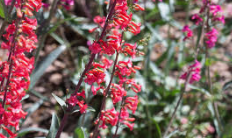
Penstemon
Tall red or pink flower spikes above a low clump, blooming late winter into spring.
Hummingbirds find these within days. Reseeds itself if you leave the stalks up.
Blackfoot Daisy
Low white daisy mounds most of the year. Very tough and very low water.
Good along the outer edge where more sun reaches.
Pink Fairy Duster
Soft pink powderpuffs in spring and again after rain, over fine airy foliage at 2 to 3 feet.
Native, and the fine texture works well under a mesquite canopy.
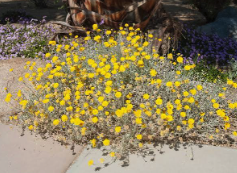
Desert Marigold
Silver foliage with yellow daisies on wiry stems, flowering most of the year.
Wants the sunnier edges. It reseeds and wanders, which fills gaps for free.
Where to go from here
This is a lot of ground, and none of it has to happen at once. The order matters more than the timeline.
First, the trees. The mesquites in the easement, the garden bed replacement, the desert willow out front, and the ironwood in the gap. They take the longest to become what you want them to be, so the sooner they're in the ground the sooner you get shade.
Second, cover the walls and fences. The pool fence hedge is the change that will make the biggest visual difference in the shortest amount of time.
Then everything else. The pollinator plantings, the front of the house, the mound, the fairy duster, the agave pups, and the pot.
Plant in the cool season, October through March. That's when things establish here, and a plant that goes in this fall will be a full year ahead of the same plant put in next June.
Get Garrett out to look at the irrigation before any of the planting happens, since that's what took the roses out.
What we can handle for you
Planting. We source the plants, prep the soil, and put everything in the ground the way it's described here. Flare above grade, native backfill, compost and mulch on the surface. Tell me which areas you want to move on and I'll put together a proposal with sizes, quantities, and pricing.
Fertilizing. The citrus program above is $99 a month. If you'd like the whole property fed rather than just the citrus, I can put a number together for that. It's the same monthly liquid application plus compost three times a year, and it's the thing that keeps everything in this write-up improving instead of holding steady.
Root flare excavation. On the citrus, and on any other tree on the property that needs it.
You can see everything we offer here: thegardennerd.org/planting-services